Category: Land & Lore

  • Between Two Lands

    Between Two Lands

    A Village Divided by a Line, Not by Living”

    Longwa, perched in the Mon district of Nagaland, is often introduced by its geopolitical curiosity — a village where one house sits in India and its backyard in Myanmar. But that’s just the beginning. What truly divides and unites here isn’t borders — it’s belonging.

    The Angh (chief)’s house, famously straddling the international boundary, is less a political statement and more a symbol of coexistence. His rule still echoes through multiple villages across both sides of the border, rooted in tribal governance and oral authority.

    Longwa doesn’t offer touristy distractions. No souvenir shops, no curated shows. What you get is a walk through history, pride, and resilience — with muddy boots and smoky kitchens for company.

    The Konyak Ink

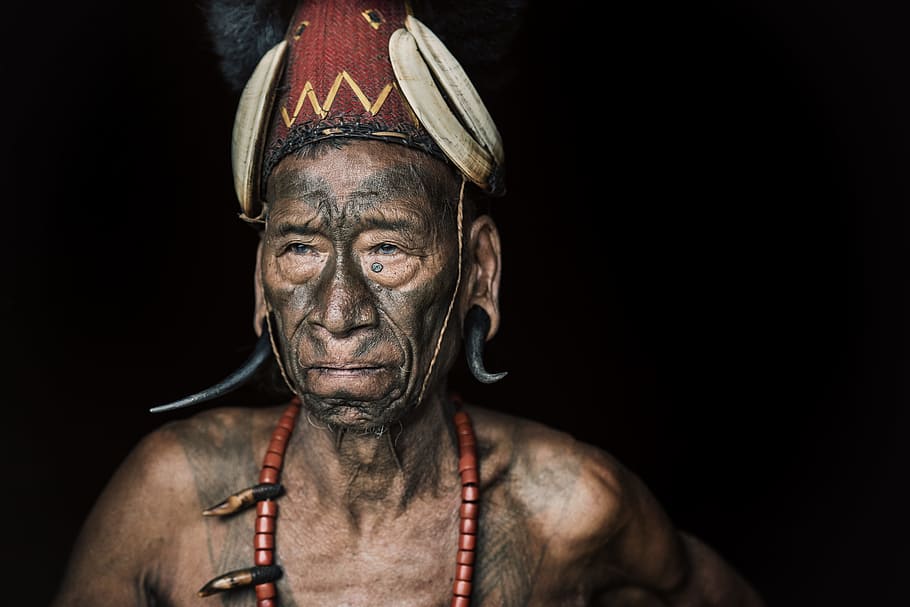
    The Konyaks, the dominant tribe in Longwa, are known across India for their distinctive facial and body tattoos, once earned after headhunting expeditions — a practice long abandoned, but not forgotten.

    These tattoos aren’t ornaments — they’re identities. Even today, the elders carry them like historical archives etched in blue-black ink.

    “Every mark has a meaning,” says a retired schoolteacher. “It tells where we’ve been. And who we were before the world knew us.”
    Longwa’s School of Wood and Smoke

    If you sit long enough in one of Longwa’s kitchens, you’ll notice the walls aren’t just dark from soot. They’re repositories. Antlers hang near hand-carved utensils, beside wooden rifles, above dried herbs. Each object speaks — of the hunt, of the harvest, of the hands that held them.

    Carving here is not a craft — it’s a skill passed through chores. Children whittle twigs into flutes; young men carve gun butts with tribal symbols. No formal schooling needed. The forest provides both material and metaphor.

    Snippets from the Village

    • The Border as a Backyard:
      Locals cross into Myanmar to attend family weddings or collect firewood — no fuss, no checkpoints, just old footpaths and older ties.
    • The Bamboo Telegraph:
      News here travels by mouth, often over log drums that once signaled warnings but now gather youth for village meetings and celebrations.
    • Meals of Memory:
      Smoked pork, sticky rice, bitter wild leaves — cooked slow and eaten slower. Meals are communal, layered with silence, stories, and salt.

    Know Before You Go: Travel Notes

    • How to Reach: Drive from Mon town, about 40 km. Roads are winding and rough — 4x4s are preferred.
    • Best Time: October to April, when the skies are clear and the village rituals are most active.
    • Where to Stay: Basic homestays exist — warm in welcome, modest in amenities.
    • Respect Boundaries: Ask before taking photos, especially of elders. Privacy is held sacred here.

    Longwa doesn’t dwell on its past, nor does it chase modernity. It stands — in the mist, in the hills — as it always has. A village where lines drawn on maps matter less than the ones etched in memory.

    Some places teach you geography. Longwa teaches you to unlearn it.”

  • Majuli the Island of Living Culture

    Majuli the Island of Living Culture

    Majuli doesn’t try to dazzle. It draws you in quietly — with its river-wrapped calm, its rituals that are not performances but parts of everyday life, and its people who carry centuries of knowledge without spectacle. Located in the heart of the Brahmaputra, Majuli is the world’s largest inhabited river island and one of Assam’s most meaningful cultural landscapes.

    A River Island That Breathes Slowly

    Reaching Majuli itself sets the tone. The ferry from Nimati Ghat takes you across the vast Brahmaputra where the sky touches water and the line between river and land fades. You won’t hear honks or engines on the island. Instead, you’ll notice the wind in the paddy fields, the hum of weaving looms, and the quiet footfall of monks walking barefoot to the Sattra.

    There’s no rush here — because time doesn’t sprint in Majuli. It lingers.”

    The Heartland of Satra Culture

    Majuli is the birthplace of the Neo-Vaishnavite movement started by 15th-century reformer Srimanta Sankardev. His teachings live on in the Satras — monastic institutions that are spiritual, cultural, and artistic centres. These aren’t tourist attractions but functioning communities where tradition is practised as daily life.

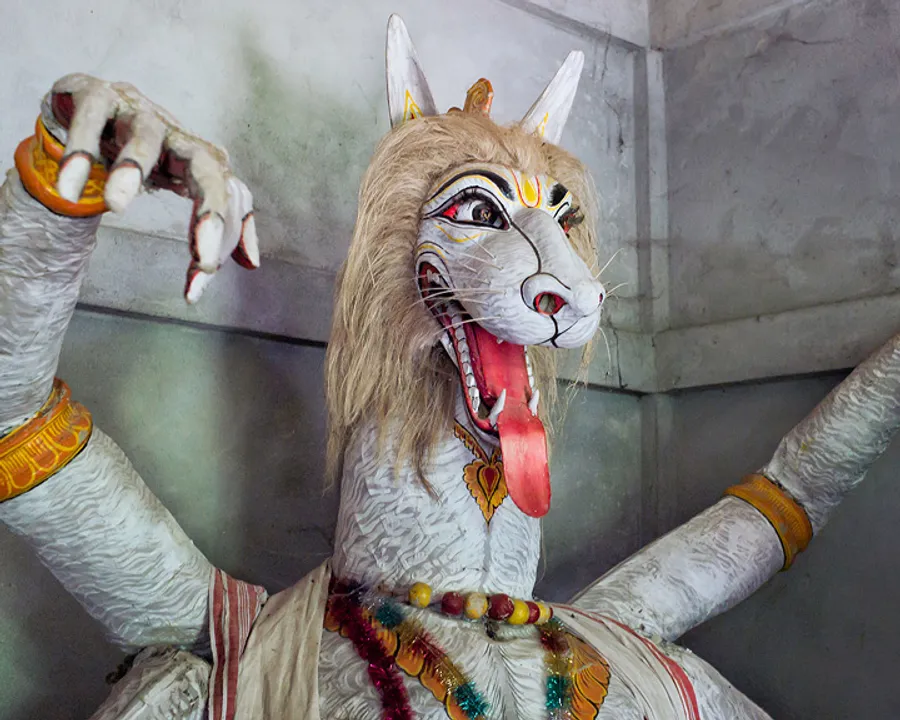
    Visit Auniati, Kamalabari, or Dakhinpat Satra and you might find monks preparing for Ankiya Naat (traditional one-act plays), making Xatriya masks out of bamboo and clay, or teaching Satriya Nritya — Assam’s classical dance form. Boys as young as six learn these sacred arts not for stage lights, but as expressions of devotion and heritage.

    Pottery Without Potter’s Wheel

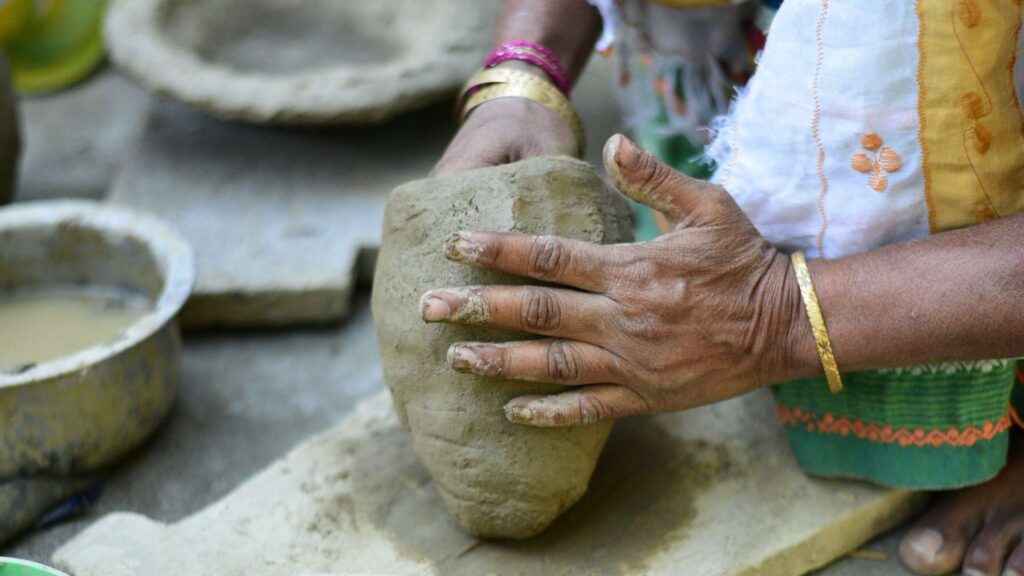
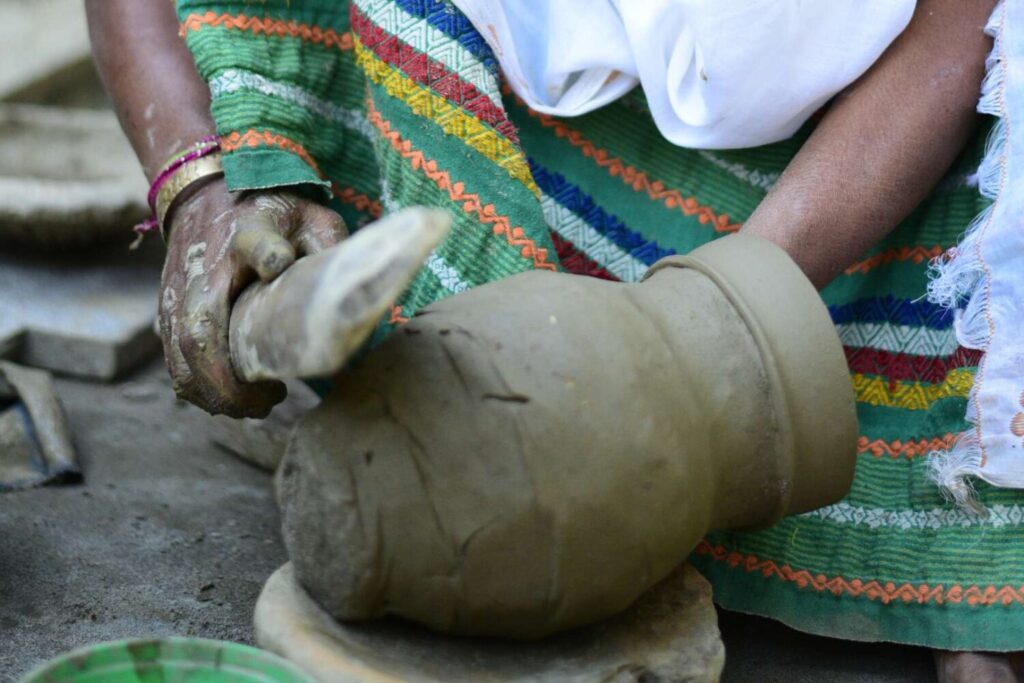
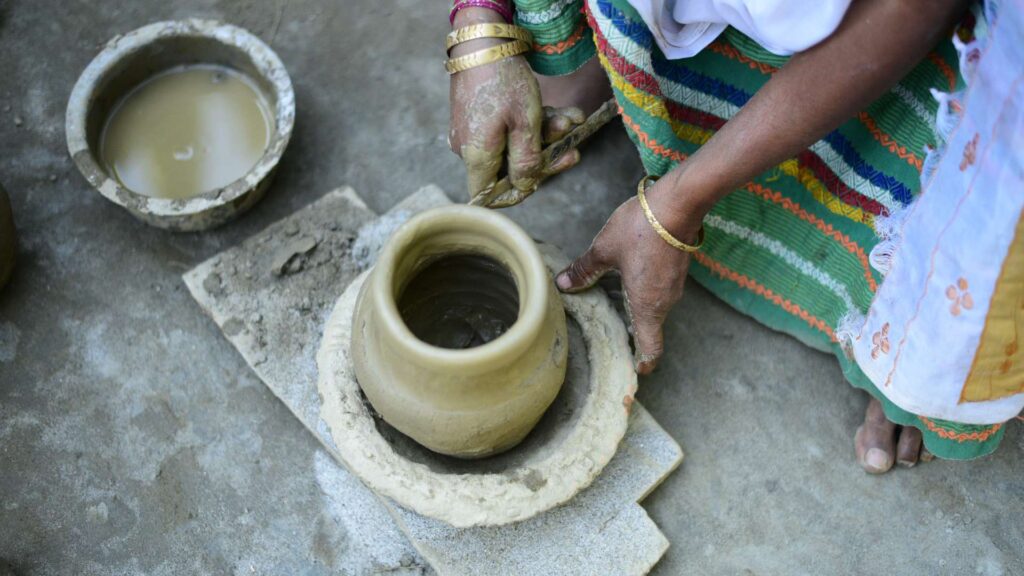
    In Salmora, on the southern edge of the island, women still make pottery using only their hands — no potter’s wheel. The knowledge passes from mother to daughter. Pots are shaped from local clay, dried in the sun, and fired with rice husk.

    One woman explained, “The clay knows the rhythm. We don’t measure. We remember.” These pots are still sent downriver to the towns and villages of Assam, just as they have been for generations.

    A Day Moves Like a Story

    Wake up in a bamboo cottage in Garamur. Have rice, boiled vegetables, and black tea with jaggery. Walk past the mustard fields to a sattra courtyard where the monks are sweeping the ground in silence. A child sells roasted peanuts at the riverbank. By dusk, the local fisherman returns with his net, and the homestay owner reads from an old text under a solar lamp.

    Nothing asks for your attention, yet everything holds it.”

    Craft That Carries Legacy

    Chamaguri village is a living gallery of Majuli’s renowned mask-making tradition. Artisans here use layered bamboo, cloth, and clay to create expressive faces used in religious dramas and cultural festivals. These masks are not souvenirs — they are sacred objects, representing mythological figures and moral themes.

    What’s unique is that children grow up in this tradition. Each home is part studio, part classroom. You don’t learn just how to paint a face, you learn what the face means.

    Know Before You Go

    • Getting There: Take a ferry from Nimati Ghat (20 km from Jorhat). Ferry timings depend on the season and water levels.
    • Stay: Homestays in Garamur and Kamalabari offer local hospitality. Choose bamboo cottages over concrete hotels for a real sense of the island.
    • Best Time: October to March, especially during Raas Mahotsav, when the island celebrates Krishna with elaborate plays and rituals.
    • How to Explore: Rent a cycle or walk — distances are short, and you’ll discover more between the places than at them.

    Some journeys teach you something new. Majuli reminds you of what you already knew but had forgotten.”

  • Jowai: Where Hills Echo with Harmony

    Jowai: Where Hills Echo with Harmony

    Nestled in the heart of the West Jaintia Hills, Jowai doesn’t scream for attention — it hums. Unlike its more tourist-trodden cousin Shillong, Jowai quietly cradles Jaintia culture, sacred lakes, limestone cliffs, and folk wisdom passed down through centuries. For those willing to slow down, Jowai offers a gentler, deeper experience of Meghalaya.

    The Spirit of the Jaintia Hills

    The Jaintia people carry a profound relationship with land, forest, and folklore. One can feel it at Syntu Ksiar, a riverside haven named the “Golden Flower.” Locals gather here for reflection, community events, and even political uprisings in the past. It’s not just scenic — it’s symbolic.

    Just outside town, the Thadlaskein Lake, steeped in legend and ritual, offers a view into the past where nature and faith intertwined effortlessly.”

    Music, Memory & Matriarchy

    Music isn’t performed here — it’s lived. The Tangmuri, a traditional wind instrument, often accompanies local ceremonies. Like the Khasis, the Jaintias follow matrilineal lineage, but their customs, dialect, and oral storytelling bring a unique rhythm to life.

    Walk through Jowai’s weekly market — not as a buyer, but as a listener. Every vegetable, herb, and fabric has a story.

    Beyond the Usual: What to Explore

    • Thadlaskein Lake: Believed to have been dug by a rebellious general, it still serves as a ritual site.
    • Durga Temple at Nartiang: One of the oldest in Meghalaya, where Hinduism meets tribal reverence.
    • Ialong Park: More than a viewpoint — it’s a sacred grove breathing centuries of eco-wisdom.
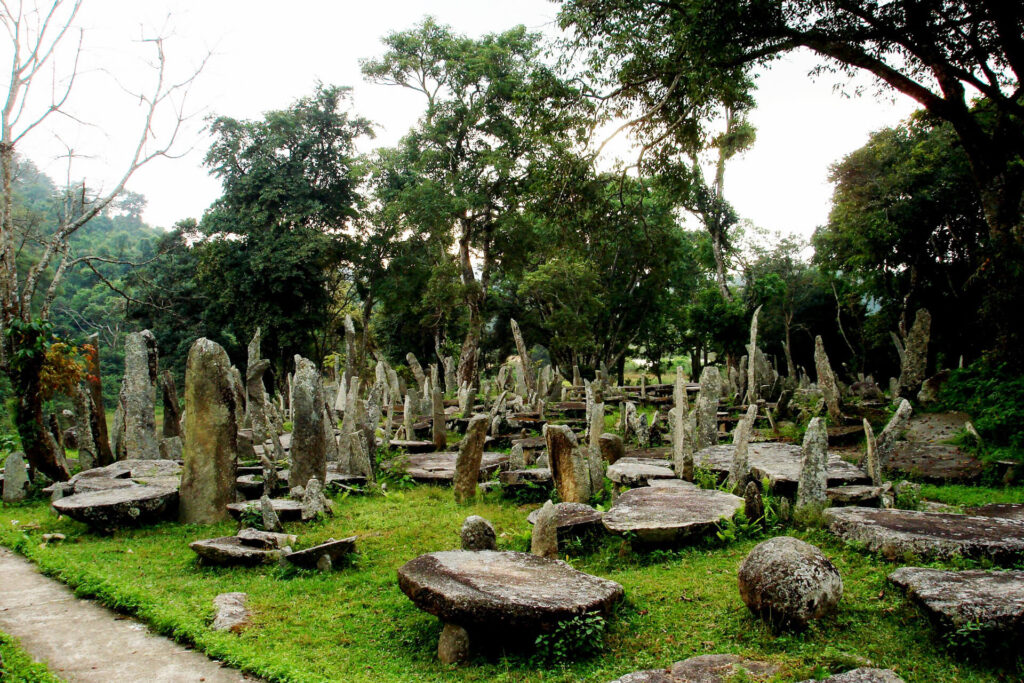
    • Stone Monoliths of Nartiang: Ancient stones standing tall, each a tale of power, pride, and protection.

    Living the Slow Life in Jowai

    To visit Jowai is to move at the pace of conversation and mist. Try fermented Jadoh, talk to weavers working with organic cotton, attend a village gathering, or simply sit by Myntdu River as it reflects the sky’s moods.

    When You Visit

    Respect silence. Let stories come to you. Some of the most powerful moments will be shared over a cup of kwai (betel nut) — if you’re invited, that’s a gesture of belonging.

    Some towns don’t raise their voice — they raise your understanding.”

  • Cherrapunjee: Beyond the Rainfall Records

    Cherrapunjee: Beyond the Rainfall Records

    Mention Cherrapunjee, and most people think of rain — endless, world-record-breaking rain. But for those who take time to linger, Sohra (as it’s locally called) reveals itself as much more than a weather report. This highland town in Meghalaya isn’t just wet — it’s wildly alive, deeply cultural, and surprisingly soulful.

    The Myth of Wetness, and What Lies Beneath

    Yes, it rains. Sometimes for weeks on end. But it’s in the rhythm of this rain that the Khasi way of life finds meaning. From water-harvesting bamboo systems to forest lore, the people here have not only adapted — they’ve celebrated the wetness. Their architecture, songs, and even food carry echoes of a land carved by clouds.

    And in the monsoon’s pause, the valley sings in green.”

    A Landscape Made for the Mindful

    Cherrapunjee is one of those rare places where geology and mythology intertwine. Gorges that echo with the sound of waterfalls. Caves that once sheltered spirits and rebels. And root bridges — living, growing testaments to Khasi ingenuity — are found in and around villages like Nongriat and Laitkynsew.

    This isn’t the place for speed travelers. Here, nature demands reverence.”

    Living with the Khasi People

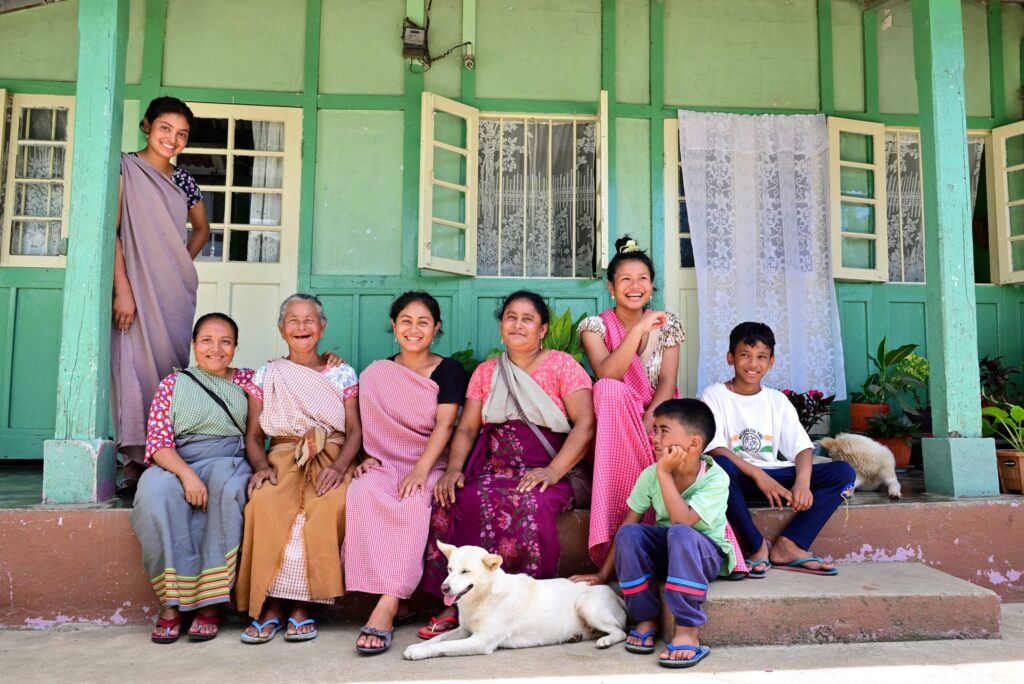
    Spend a day with a local family, and you’ll see that Khasi culture flows matrilineally, with women holding family and land. Conversations in softly spoken Khasi or English unfold over plates of ja doh (rice and pork) or vegetarian delights like jadoh tungtap. The sense of identity here is strong — rooted in earth, clan, and sky.

    Experiences That Matter

    • Trek to the Double-Decker Root Bridge in Nongriat — more than a hike, it’s a lesson in resilience.
    • Visit Mawsmai Cave, not just for the formations, but for the whispered histories inside.
    • Spend a night in a Khasi homestay, and listen to rain hit the tin roof like a lullaby.
    • Chase waterfalls like Nohkalikai, but leave room for the unnamed ones you’ll discover.

    When You Visit

    Walk light. Pack layers. Ask questions. And always remember — you’re a guest in someone’s rain-loved, memory-soaked home.

    Not all that falls is heavy — some rains are made of stories waiting to be heard.”

  • Chandubi: Where Forests Whisper to Water

    Chandubi: Where Forests Whisper to Water

    Tucked at the foothills of the Garo-Khasi hills, Chandubi Lake is where Assam loosens its urban edges and settles into stillness. Formed after the 1897 earthquake, this natural lake is more than a scenic spot — it’s a living mosaic of forest, folklore, and indigenous life. Just 60 km from Guwahati, it’s a reminder that you don’t have to go far to step into a world that still listens to nature.

    A Lake with a Seismic Soul

    Chandubi was born of upheaval — created when the ground shook and a portion of land sunk to form this serene body of water. Today, the lake is a birdwatcher’s haven, its waters gently lapping against the edges of dense forest and small tribal settlements.

    It’s not commercial. It’s not curated. And that’s exactly the point.

    Meeting the Rabha Way of Life

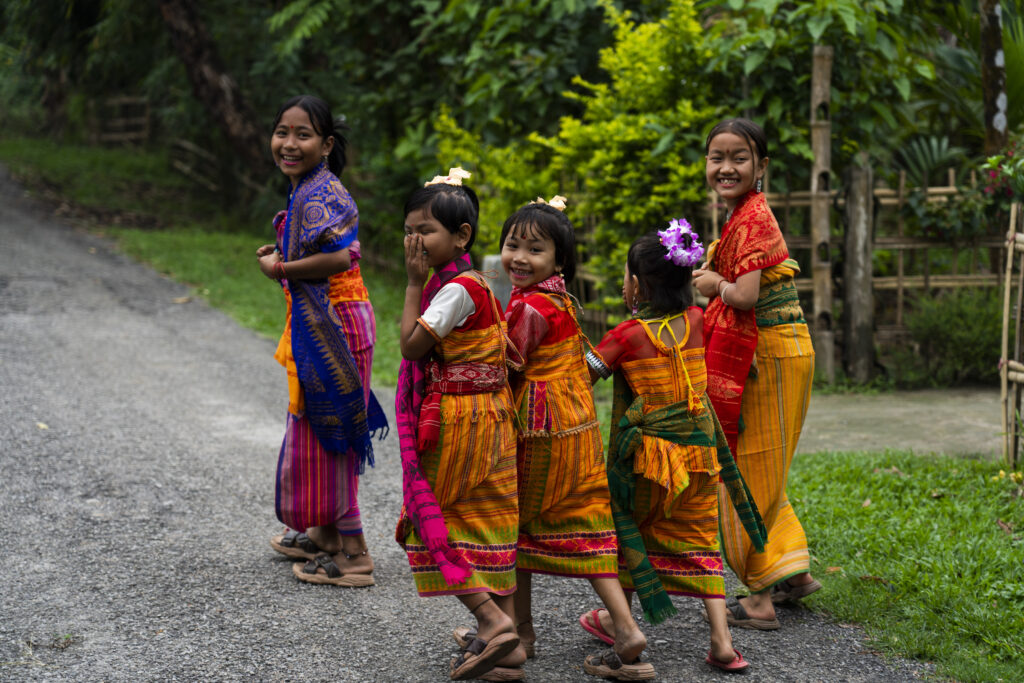
    The villages around Chandubi are home to the Rabha tribe, known for their hospitality, bamboo architecture, and deep forest knowledge. Spend a day in a Rabha homestay and you’ll experience life stripped of pretense — morning meals of roasted yam and puffed rice, afternoons weaving or fishing, and evenings filled with quiet conversation and soft laughter.

    They don’t perform culture here — they live it.”

    Walks, Canoes & Conversations

    There’s not a checklist of things to do at Chandubi, and that’s what makes it beautiful. Walks through the forest trails reveal medicinal plants, butterflies, and calls of hornbills. Take a canoe ride across the lake as the sun dips into orange. Or simply sit by the water and let stories come to you — from elders, from silence, from wind.

    Experiences to Hold Close

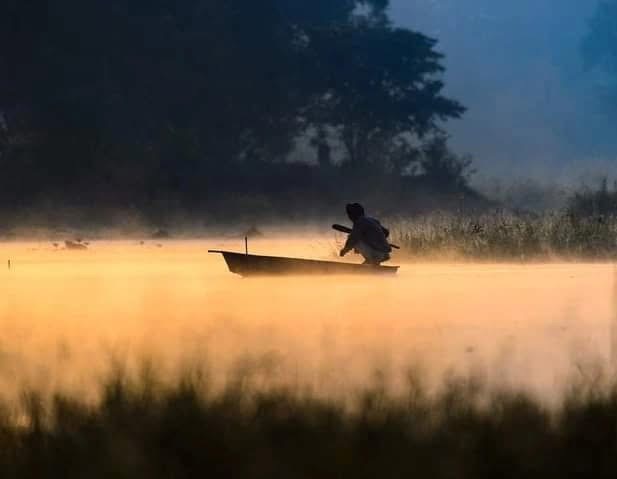
    • Canoe rides at dawn, watching mist rise off the lake.
    • Cooking with a Rabha family, learning about wild foraging and seasonal eating.
    • Guided forest walks with indigenous hosts who speak the language of the land.
    • Birdwatching, especially during winter when migratory birds visit the lake.

    A Word of Respect

    Chandubi thrives on simplicity. Skip the plastics. Walk instead of rev. And ask before you click. This place is not a backdrop — it’s a home. Treat it with the gentleness it deserves.

    In Chandubi, the stillness speaks louder than the city ever could.”