Category: Tribes & Traditions

  • Healing in the Highlands

    Healing in the Highlands

    A Landscape of Layers”

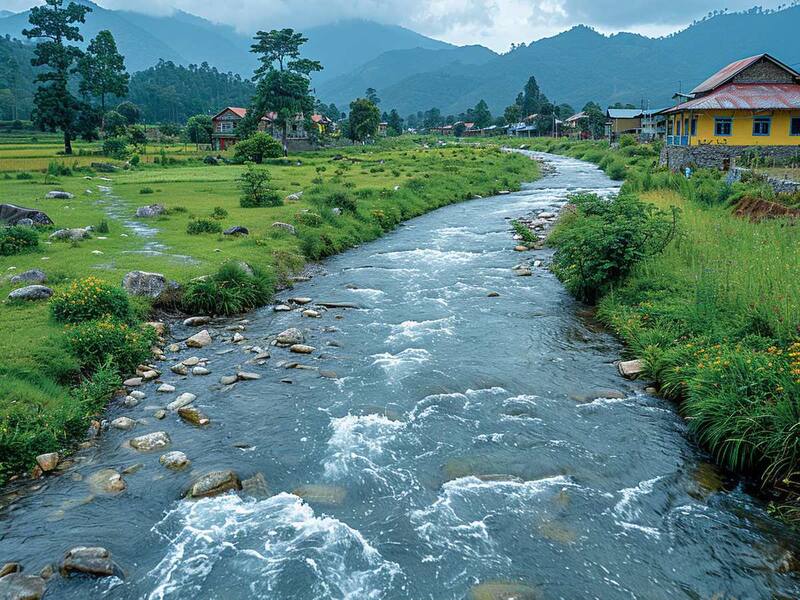
    Zemithang isn’t a place that announces itself. It unfurls — with cedar-scented winds, quiet prayer wheels, and the hush of mountains that keep their own counsel. Near the borderlands of Arunachal Pradesh and Bhutan, this Monpa village holds both isolation and invitation in equal measure.

    The roads may narrow as you ascend, but your perspective only widens.

    Where Wisdom Grows Wild

    In a shaded clearing beyond the cluster of houses, an elderly Monpa woman tends to a garden. Not of vegetables, but of remedies — wild mint for headaches, rhododendron bark for inflammation, and nettle roots for digestive woes.

    “Everything you need, the forest already knows,” she says gently, more as a passing thought than a lecture.
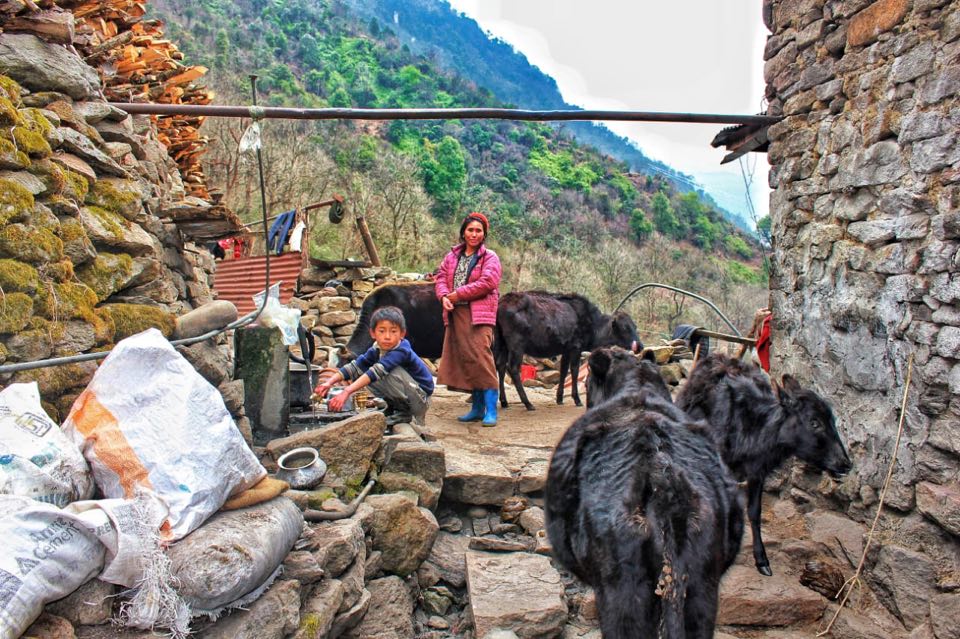
    You won’t find a pharmacy here. You’ll find a relationship — between people and place, where plants are not products but kin. Knowledge isn’t archived in books. It’s grown, gathered, and remembered.

    Between Borders, Beneath Belief

    The Gorsam Chorten — a serene, white-domed structure — watches over the valley like an old monk at rest. Locals say it mirrors the Boudhanath of Nepal. Pilgrims walk around it quietly, spinning prayer wheels not for spectacle, but out of habit, faith, and rhythm.

    There are few tourists here, fewer distractions. Just wind, flags, and footsteps. The border with Bhutan is close, but invisible. What’s more visible is harmony — of Buddhism, of animism, of generations walking the same slow paths.

    Snippets from Zemithang

    • The Courtyard Conversations:
      Women sit weaving yak wool by hand, talking about clouds as if they were gossiping about neighbors.
    • The School Without Bells:
      Children gather under a pine tree with a teacher who uses pebbles and parables in equal measure.
    • The Bridge Across Time:
      A rickety wooden bridge leads to a hamlet untouched by mobile signals — but rich in stories passed nightly by firelight.

    Know Before You Go: Travel Notes for Zemithang

    • How to reach: Take a private vehicle or shared sumo from Tawang town, passing through Lumla. The road is bumpy but worth every turn.
    • Stay: Family-run homestays offer traditional meals, wool blankets, and lots of quiet.
    • When to go: March to May or September to November — for flowers, festivals, and visibility.
    • Respect the place: Photography is welcome, but always ask. Some corners of life here are meant to be experienced, not archived.

    Zemithang is not on many maps — not emotionally, at least. But to walk here is to witness a way of life where healing is slow, silence is wise, and faith is not worn — it’s lived.

    Some places teach you to listen. Zemithang teaches you to listen without asking for answers.”

  • Khonoma Stands Still

    Khonoma Stands Still

    The Village That Rewrote Its Future”

    Perched in the folds of Nagaland’s green hills, Khonoma is a place that decided — decades ago — to live differently. Once known for fierce warriors and age-old resistance, the village chose to pivot. From guns to grain. From forest raids to forest guards.
Khonoma is India’s first Green Village not because of a label, but because of a choice. A collective, conscious, community-led choice.

    You won’t hear slogans here. No signs that scream sustainability. Just everyday acts that whisper it — bamboo fences, rain-fed fields, woodsmoke from kitchens that reuse, not discard.

    The Youth Who Stayed

    In most villages across the Northeast, you hear stories of the youth who left. But in Khonoma, you meet the ones who stayed — by choice.

    A local entrepreneur, runs a millet café with two friends. “Leaving was never tempting,” she shrugs. “There’s more work to be done here than in any city. Real work.”

    That real work includes reviving forgotten grains, documenting dialects, organizing terrace farming workshops, and hosting visitors — not as guests, but as learners.

    Terraces of Memory

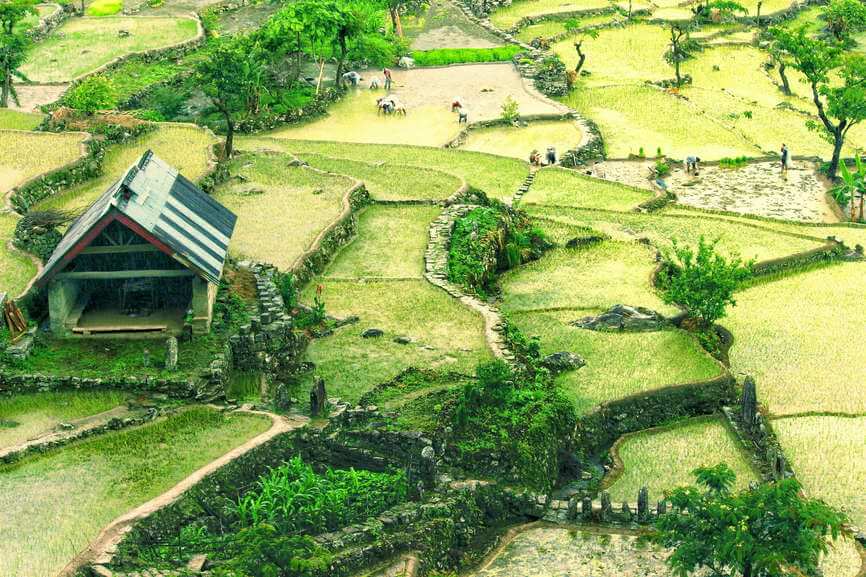
    The fields of Khonoma aren’t just food sources. They’re archives. Rice terraces carved into the hills are named, not numbered. Each has a story, a family, a harvest song.

    Even their construction speaks of balance — not against nature, but with it. Bamboo aqueducts redirect water. Trees shade grain. Grasslines prevent soil slip. There is no textbook — just taught eyes and calloused palms.

    Snippets from Khonoma

    • The Guarded Forest:
      The 70 sq. km. Khonoma Nature Conservation and Tragopan Sanctuary (KNCTS) is protected entirely by the community — without state patrol. Not a single tree is felled without the council’s blessing.
    • The Funeral Log:
      Every tree cut has a purpose. Some are marked years in advance for future rituals — including logs for final rites. Life and death both accounted for, respectfully.
    • The Local Assembly:
      Decisions are made at the Morung (traditional men’s dormitory). Modern problems — like phone towers — are debated with ancient patience.

    Know Before You Go

    • Getting There: 20 km from Kohima, accessible by shared taxis or private vehicles.
    • Stay Options: Homestays offering millet porridge for breakfast and views that don’t fit in frames.
    • Best Season: September to April — clear skies, green fields, warm fires.
    • Local Etiquette: Ask before entering Morungs. Don’t interrupt when elders speak — even if you don’t understand the dialect.

    Khonoma isn’t trying to be a model. It doesn’t perform for your admiration. It just continues — quietly, attentively, collectively — like a stream carving its own bed. In a world obsessed with fast futures, Khonoma reminds us of the dignity in deliberation.

    Progress isn’t always about moving forward. Sometimes it’s about standing your ground.”

  • Between Two Lands

    Between Two Lands

    A Village Divided by a Line, Not by Living”

    Longwa, perched in the Mon district of Nagaland, is often introduced by its geopolitical curiosity — a village where one house sits in India and its backyard in Myanmar. But that’s just the beginning. What truly divides and unites here isn’t borders — it’s belonging.

    The Angh (chief)’s house, famously straddling the international boundary, is less a political statement and more a symbol of coexistence. His rule still echoes through multiple villages across both sides of the border, rooted in tribal governance and oral authority.

    Longwa doesn’t offer touristy distractions. No souvenir shops, no curated shows. What you get is a walk through history, pride, and resilience — with muddy boots and smoky kitchens for company.

    The Konyak Ink

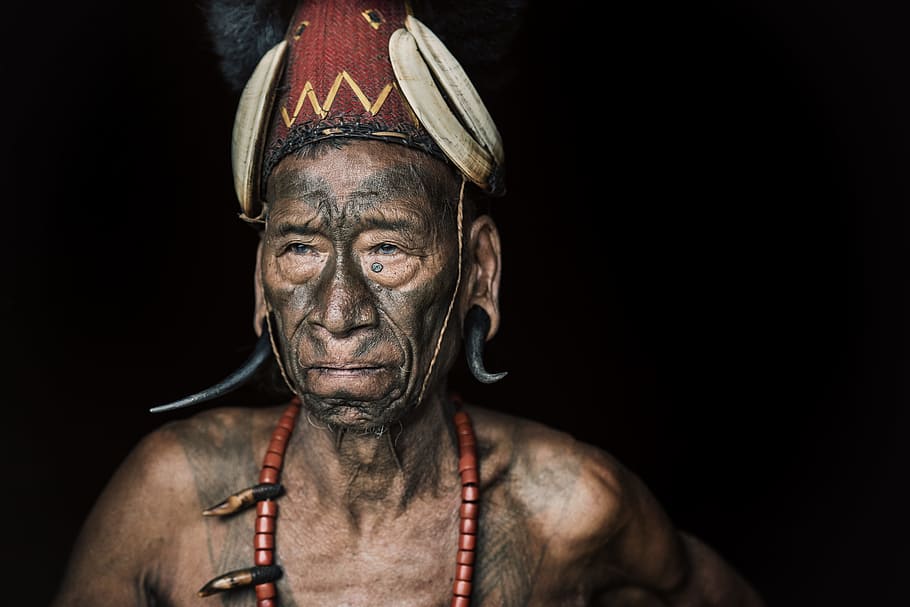
    The Konyaks, the dominant tribe in Longwa, are known across India for their distinctive facial and body tattoos, once earned after headhunting expeditions — a practice long abandoned, but not forgotten.

    These tattoos aren’t ornaments — they’re identities. Even today, the elders carry them like historical archives etched in blue-black ink.

    “Every mark has a meaning,” says a retired schoolteacher. “It tells where we’ve been. And who we were before the world knew us.”

    Longwa’s School of Wood and Smoke

    If you sit long enough in one of Longwa’s kitchens, you’ll notice the walls aren’t just dark from soot. They’re repositories. Antlers hang near hand-carved utensils, beside wooden rifles, above dried herbs. Each object speaks — of the hunt, of the harvest, of the hands that held them.

    Carving here is not a craft — it’s a skill passed through chores. Children whittle twigs into flutes; young men carve gun butts with tribal symbols. No formal schooling needed. The forest provides both material and metaphor.

    Snippets from the Village

    • The Border as a Backyard:
      Locals cross into Myanmar to attend family weddings or collect firewood — no fuss, no checkpoints, just old footpaths and older ties.
    • The Bamboo Telegraph:
      News here travels by mouth, often over log drums that once signaled warnings but now gather youth for village meetings and celebrations.
    • Meals of Memory:
      Smoked pork, sticky rice, bitter wild leaves — cooked slow and eaten slower. Meals are communal, layered with silence, stories, and salt.

    Know Before You Go: Travel Notes

    • How to Reach: Drive from Mon town, about 40 km. Roads are winding and rough — 4x4s are preferred.
    • Best Time: October to April, when the skies are clear and the village rituals are most active.
    • Where to Stay: Basic homestays exist — warm in welcome, modest in amenities.
    • Respect Boundaries: Ask before taking photos, especially of elders. Privacy is held sacred here.

    Longwa doesn’t dwell on its past, nor does it chase modernity. It stands — in the mist, in the hills — as it always has. A village where lines drawn on maps matter less than the ones etched in memory.

    Some places teach you geography. Longwa teaches you to unlearn it.”

  • Chandubi: Where Forests Whisper to Water

    Chandubi: Where Forests Whisper to Water

    Tucked at the foothills of the Garo-Khasi hills, Chandubi Lake is where Assam loosens its urban edges and settles into stillness. Formed after the 1897 earthquake, this natural lake is more than a scenic spot — it’s a living mosaic of forest, folklore, and indigenous life. Just 60 km from Guwahati, it’s a reminder that you don’t have to go far to step into a world that still listens to nature.

    A Lake with a Seismic Soul

    Chandubi was born of upheaval — created when the ground shook and a portion of land sunk to form this serene body of water. Today, the lake is a birdwatcher’s haven, its waters gently lapping against the edges of dense forest and small tribal settlements.

    It’s not commercial. It’s not curated. And that’s exactly the point.

    Meeting the Rabha Way of Life

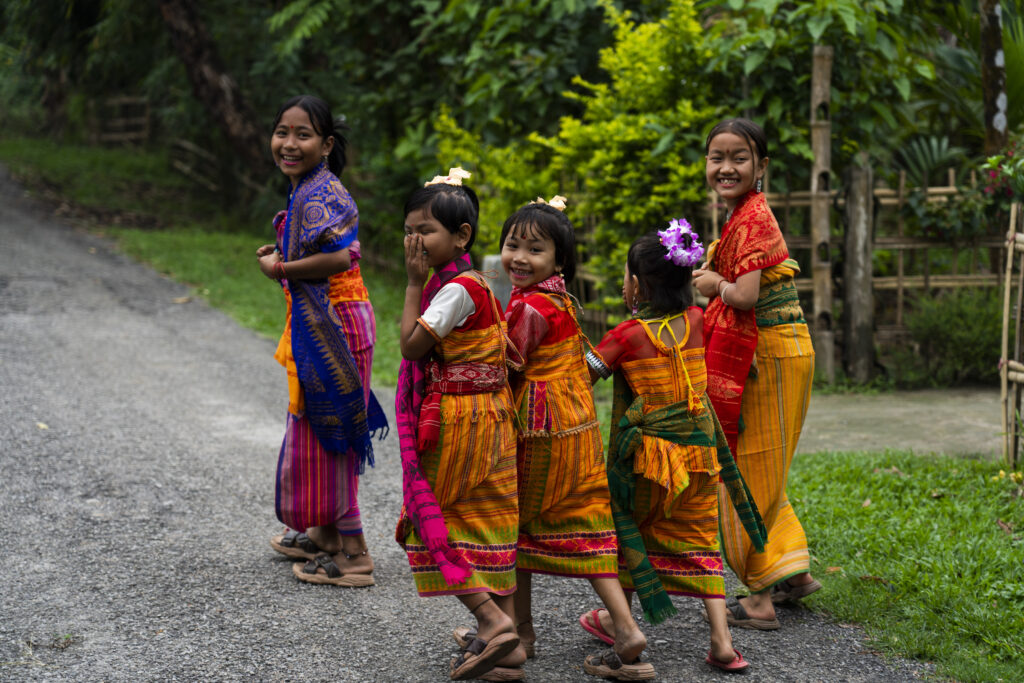
    The villages around Chandubi are home to the Rabha tribe, known for their hospitality, bamboo architecture, and deep forest knowledge. Spend a day in a Rabha homestay and you’ll experience life stripped of pretense — morning meals of roasted yam and puffed rice, afternoons weaving or fishing, and evenings filled with quiet conversation and soft laughter.

    They don’t perform culture here — they live it.”

    Walks, Canoes & Conversations

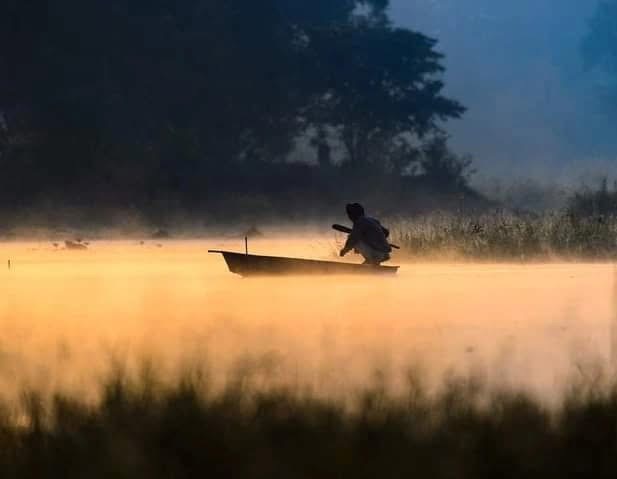
    There’s not a checklist of things to do at Chandubi, and that’s what makes it beautiful. Walks through the forest trails reveal medicinal plants, butterflies, and calls of hornbills. Take a canoe ride across the lake as the sun dips into orange. Or simply sit by the water and let stories come to you — from elders, from silence, from wind.

    Experiences to Hold Close

    • Canoe rides at dawn, watching mist rise off the lake.
    • Cooking with a Rabha family, learning about wild foraging and seasonal eating.
    • Guided forest walks with indigenous hosts who speak the language of the land.
    • Birdwatching, especially during winter when migratory birds visit the lake.

    A Word of Respect

    Chandubi thrives on simplicity. Skip the plastics. Walk instead of rev. And ask before you click. This place is not a backdrop — it’s a home. Treat it with the gentleness it deserves.

    In Chandubi, the stillness speaks louder than the city ever could.”

  • Ziro: Where Fields Sing and Mountains Listen

    Ziro: Where Fields Sing and Mountains Listen

    Ziro is not just a place on the map — it’s a melody between pine-covered hills, golden rice terraces, and ancient tribal memory. Nestled in the lower Subansiri district of Arunachal Pradesh, this picturesque valley is home to the Apatani tribe, known for their harmony with nature, sustainable farming practices, and a lifestyle that gently resists the rush of time.

    Whether you walk through its UNESCO-nominated landscapes or sit beside an elder spinning tales of rice and sky, Ziro invites you to breathe slower, observe deeper, and feel more present.

    A Valley That Thinks in Green

    The Apatani’s renowned wet rice cultivation without the use of machinery or external irrigation is a marvel of indigenous engineering. Walk through their fields and you’ll find yourself amid an ecosystem where agriculture and aquaculture coexist — where each terrace tells a story of resilience, adaptation, and deep-rooted care.

    It’s not about productivity here; it’s about balance. The birds are welcome. So are the frogs. Life thrives where nothing is wasted.

    Between Pine Groves and Folk Songs

    Ziro’s air carries tunes. Sometimes it’s the sound of Bihu-like Apatani folk songs, and other times it’s the echo of the wind through pine trees. Locals often gather with handmade instruments, performing not for applause, but for memory.

    Ziro also hosts the Ziro Music Festival, an independent celebration of culture, sound, and sustainable living. But the valley sings even when there’s no stage — every corner hums with lived rhythm.

    People of the Mist and Meaning

    The Apatanis are known for their deep wisdom, kindness, and striking identity — traditionally marked by facial tattoos and nose plugs in women, a practice rooted in both cultural pride and historical resistance. While modern generations may choose differently, the stories remain, carried with dignity.

    Their homes are wooden, their hearts are open, and their understanding of the land is a quiet education in itself.”

    Experiences to Hold Close

    • Walk the terraced farms alongside Apatani farmers and learn about their forest-to-field knowledge.
    • Visit Hong Village, one of the largest tribal settlements, and observe centuries-old Apatani architecture.
    • Share a meal of local rice beer and bamboo-cooked pork or greens.
    • Explore the sacred groves and ritual sites, where nature and faith meet under ancient canopies.

    A Word of Respect

    Ziro is stunning, yes. But it’s also sacred — not in the religious sense, but in its intimacy with life. Avoid plastic, don’t shout over its silence, and travel as if someone has opened their diary for you to read — gently, and with gratitude.

    To walk through Ziro is to hear how softly the earth can speak.”