Category: Forests & Wildlife

  • The Forest Keeps the Beat

    The Forest Keeps the Beat

    Chandubi’s lake may be its centrepiece, but listen closer — it’s the forest that keeps the rhythm. When dusk falls over this quiet edge of Assam, the Rabha, Bodo, and Garo communities light their fires, tune their drums, and dance not for an audience — but for the land, the harvest, and the gods.

    In Chandubi, dance is not performance. It is permission — to feel, to celebrate, to belong.

    Dancing Between Earth and Sky

    Local festivals like the Bogai Festival (Rabha) and Domashi (Bodo) are less about grand stages and more about sacred clearings. Young men and women in handwoven attire gather barefoot on earth that has grown their food, faced their floods, and heard their stories.

    The Rabha dances often imitate animals, seasons, or everyday life — one step for planting, one sway for rain, and a beat for the sun. Bodo dance includes rhythmic hip movements and slow turns that mirror the circular logic of seasons.

    We don’t practise,” says a local teacher, “we remember. Dance is how we remember who we are.”

    Instruments That Speak Without Words

    The forest lends its materials:

    • The Kham (drum) made from tree bark and animal hide.
    • The Siphung (bamboo flute) whose notes mimic the forest’s breath.
    • The Serja (a string instrument) that carries the emotional weight of a thousand monsoons.

    These are not polished orchestra tools — they’re forest tools. And their sound isn’t rehearsed — it’s remembered.

    Snippets from the Grove

    1. The Dance Begins with the Fire:
      At every gathering, a fire is lit first. Dancers move around it slowly, letting the rhythm build like rainfall. The fire is witness, not spotlight.
    2. Children Learn by Watching:
      There are no classes. Children sit with elders, copy moves, and inherit rhythm like they inherit soil.
    3. Dance to Heal:
      Some women believe a slow dance around the lake during full moon helps ease body pains and childbirth complications — “The lake knows,” they say.

    When Trees Dance Too

    During Domashi, a local tree known as Dighol Bon is decorated and danced around. It is not cut, never harmed — only honoured. The community believes that even trees have spirit rhythms, and when treated with music and respect, they offer better fruit and shade the next year.

    Know Before You Go

    • Festival timings: Check local calendars; Rabha and Bodo festivals often follow lunar schedules.
    • Stay options: Eco-huts and tribal homestays near the lake — some even include dance demonstrations and drumming sessions.
    • Cultural tip: Do not interrupt dancers for photos. Watch quietly, participate only if invited, and thank the drummer after.

    In Chandubi, dance is not escape — it is return. Every drumbeat echoes a harvest remembered, a storm survived, a story retold. To witness it is to realise: silence is not the opposite of music. It is its beginning.

    Some places speak through language — Chandubi speaks through rhythm.”
  • Fields, Forests and the Quiet Pact

    Fields, Forests and the Quiet Pact

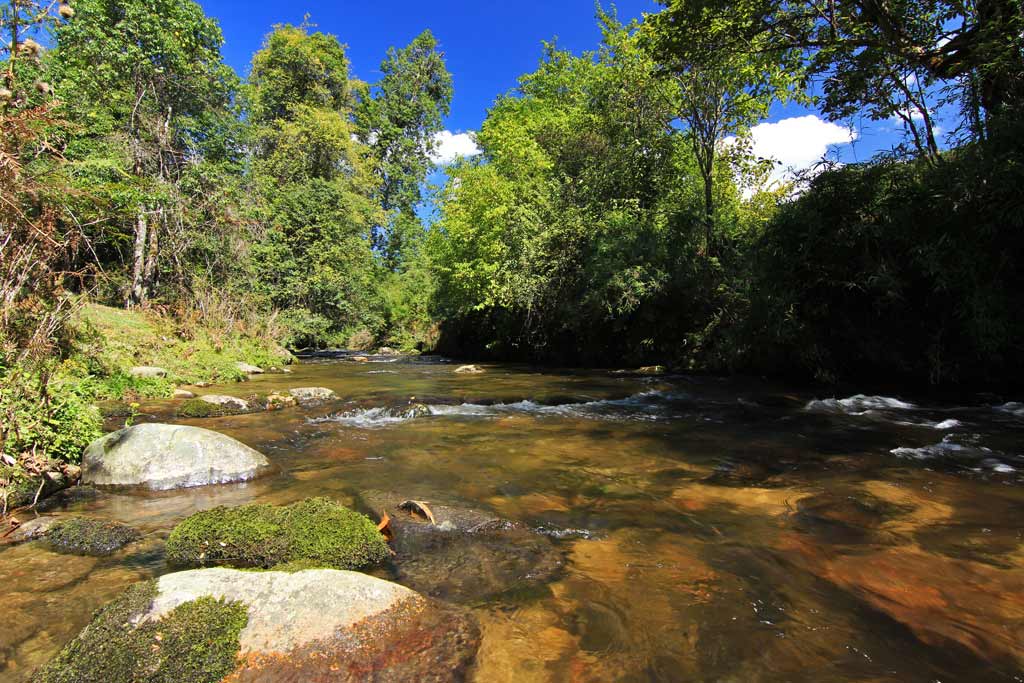
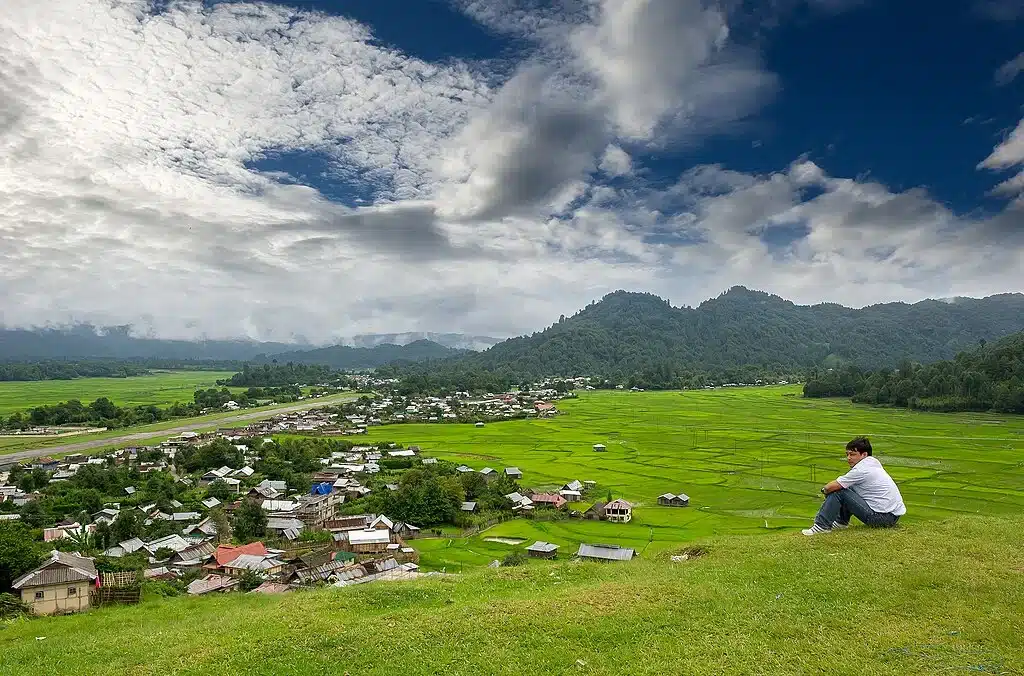
    Ziro isn’t cloaked in wilderness — it wears it like second skin. Nestled in Arunachal Pradesh’s Apatani Plateau, Ziro doesn’t separate the forest from the field, the sacred from the everyday. Here, pine-covered ridges, bamboo groves, and paddy fields don’t just exist — they co-exist, held together by an unspoken pact of respect.

    For the Apatanis, the forest is not just something to conserve — it is something to converse with.

    Agroforestry Before It Was a Trend

    Long before climate scientists coined the term “agroforestry,” the Apatanis were already practicing it — integrating wet rice cultivation with fish farming, bordered by carefully preserved bamboo belts and pine patches.

    No fences divide utility from reverence. Trees are planted not just for timber, but for festivals. Bamboo is harvested with ceremonies. Even leaves have seasons — and stories.

    This interdependence isn’t strategy — it’s memory, ritual, and responsibility.

    “Our field feed us, but it is the forest that watches over us,” says an elderly neighbor of our hosts.

    Talley Valley: Ziro’s Breathing Lung

    Just beyond the cultivated valley lies the Talley Valley Wildlife Sanctuary, a high-altitude haven of orchids, clouded leopards, and Mithun trails. It’s one of the few places where temperate, sub-tropical, and alpine vegetation meet — creating a botanical overlap that is rare even in biodiversity-rich Northeast India.

    This isn’t a safari park. There are no curated trails. You walk through moss-laced silence, across hanging bridges, and under the gaze of hornbills — who might just decide to lead or ignore you.

    Talley Valley

    Snippets from the Forest-Valley Life

    • Birds as Timekeepers
      Locals note the arrival of the Himalayan Cuckoo as the sign to start sowing. The Great Hornbill’s flight is believed to bring omens — of birth, marriage, or war.
    • Tree Carvings in Siiro
      In some pockets, trunks are carved with ancestral markings — small lines and patterns representing clans and stories. The trees, in turn, are never cut.
    • Bamboo and Belief
      Certain groves are considered taboo zones — where hunting, cutting, or even loud laughter is forbidden. Children are told these are places “where the spirits rest.”

    House Posts That Speak

    Apatani homes often have central wooden posts carved with symbolic motifs — some depict animals, others ancestors or forest spirits. These aren’t decorative — they are reminders. One elderly man explained, “We plant a tree knowing it will become a pillar. The pillar then remembers us when we’re gone.”

    Know Before You Go

    • Best time: March to May (lush forests) and October (after harvest)
    • Where to stay: Homestays in Hong, Hari or Hija villages; guided treks into Talley Valley can be arranged locally
    • Etiquette tips:
    • Don’t litter near groves — many are sacred
    • Always ask before photographing house carvings
    • Avoid entering forest paths alone — take a local guide

    Ziro doesn’t guard its forests — it grows with them. The trees here are not distant beings to be watched. They are woven into homes, customs, songs, and silences. And if you walk gently enough, they might let you in — not as a visitor, but as someone who knows how to listen.

    In Ziro, the forest isn’t beyond the fence — it begins with your doorway.”

  • Guardians of the Green

    Guardians of the Green

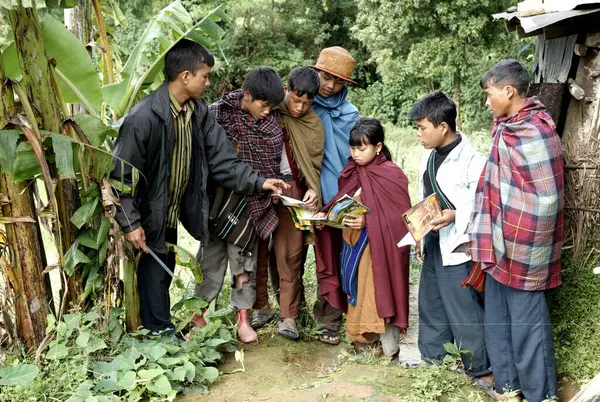
    Tucked between the emerald hills of Nagaland, Khonoma isn’t just a village — it’s a pledge. A promise made generations ago to stop hunting indiscriminately, to stop felling forests endlessly, and to start living with the land, not just off it.

    Today, Khonoma stands not as a tourist spot but as India’s first Green Village — a living example of how tradition can lead the way in conservation.

    From Battlefield to Sanctuary

    In the 19th century, Khonoma was known for its fierce warriors who resisted British colonization. The same determination now protects its hills. In 1998, after decades of unsustainable hunting practices, the villagers voluntarily declared 70 square kilometers of their forest as the Khonoma Nature Conservation and Tragopan Sanctuary (KNCTS).

    This wasn’t government-imposed — it was community-willed. Today, you’ll still find traps, but they’re rusted, tied to trees as reminders of a past they chose to leave behind.

    The Tale of the Tragopan

    Khonoma was once the hunting ground of the Blyth’s Tragopan, a rare pheasant and Nagaland’s state bird. Its numbers were falling fast. But thanks to the conservation efforts, the birds are now being spotted again — timid, yes, but slowly trusting the silence of safety.

    “We used to hunt them to show bravery. Now we protect them to show wisdom,” shares Khonoma’s community elder.

    Snippets from the Forest

    • The Ziekiezou Trek:
      This short but rich trail leads through sacred groves, whispering bamboo, and viewpoints overlooking rice terraces. Guided walks often include stories of medicinal herbs and ancestral boundaries marked by stones.
    • Woodsmoke & Watchtowers:
      Traditional Naga watchtowers once used to spot enemies are now used to sight hornbills. From up there, Khonoma unfolds like a green quilt stitched by generations.
    • No-Gun Generation:
      A new youth group proudly calls themselves the “No-Gun Boys.” They document birdlife, guide treks, and lead awareness drives in local schools.

    Know Before You Go

    • Permission required for KNCTS access: Most homestays can arrange it.
    • Best time: October to April for birdwatching and clear hikes.
    • Avoid plastic: The village practices strict eco-tourism policies.
    • Stay local: Homestays offer guided conservation walks and heritage meals.

    Khonoma didn’t wait for global campaigns or NGOs to fix its future. It looked inward. It chose to change — not to attract applause, but to protect its soul. And in doing so, it became a forest that speaks — not just in rustles and bird calls, but in choices.

    In Khonoma, every leaf is a lesson — not from textbooks, but from the hands that chose not to cut it.”

  • Where Rain Writes the Rules

    Where Rain Writes the Rules

    When the Sky is a Storyteller”

    Cherrapunjee isn’t just about heavy rainfall. It’s about how people live with the rain — not against it. It’s one of the few places where weather becomes a part of memory. Here, conversations pause mid-sentence when the rain thickens. Tea tastes better under tin roofs. Children play barefoot in puddles — because wet isn’t a nuisance, it’s a way of life.

    The Khasi call this land Sohra — a name that lives in lullabies, local legends, and laughter.

    Living Bridges, Living Patience

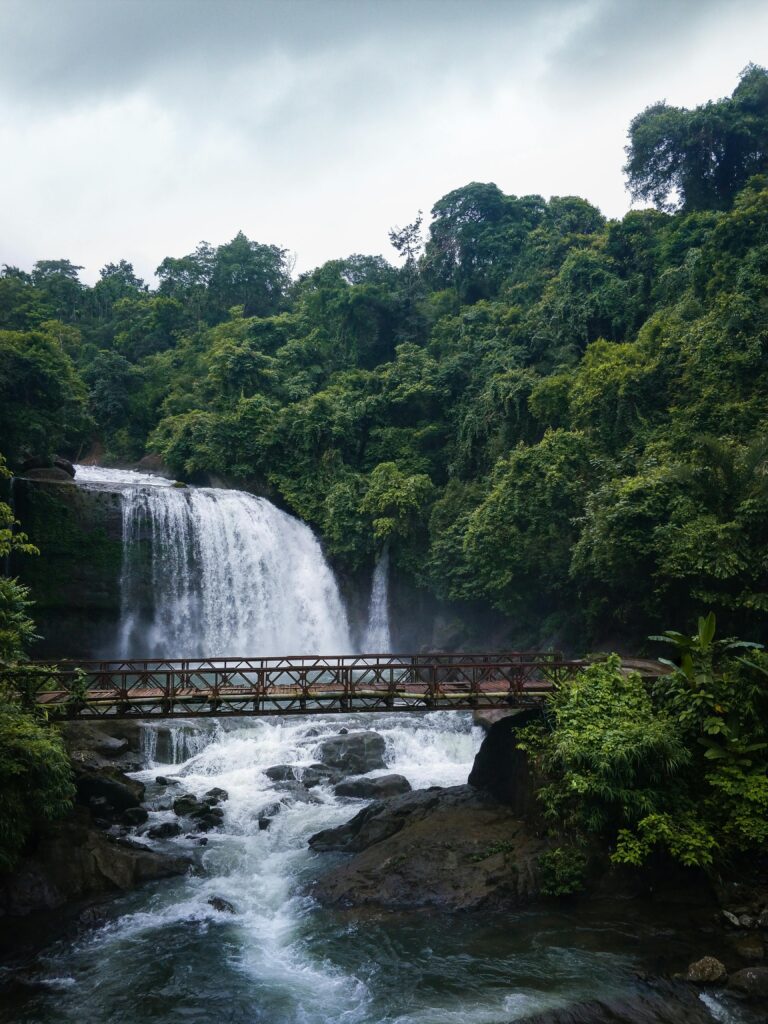
    One of the most iconic gifts of Cherrapunjee is its living root bridges. These are not made — they are grown. Over decades, villagers guide the roots of the Ficus elastica tree across streams until they take shape and strength.

    They’re not for show — they’re used by schoolchildren, farmers, elders. Each bridge is a lesson in time, resilience, and care — no shortcuts, no urgency.

    We never asked the trees to hurry,” says Sukher, a local guide. “The forest taught us to wait.”

    Snippets in the Mist

    • The Hills Echo Differently:
    • In some corners, you’ll hear folk songs carried across valleys. They’re not sung loud — they’re meant for those who listen.
    • The Orange Vendor by the Cliff:
    • He doesn’t just sell fruit. He explains which tree it came from, when it was picked, and how the skin makes a great face pack. Everything here comes with a story.
    • Monoliths in the Grass:
    • Scattered across meadows, they stand like old sentinels. Some say they mark ancient clan gatherings, others call them waypoints for the soul. No one knows for sure — and maybe that’s the beauty.

    Interesting Insight: Rain as Ritual

    Locals in Sohra don’t treat rain as a problem to escape. Rain festivals, traditional homes with slit ventilation, rain-harvesting pits — all speak of a lifestyle tuned to monsoon rhythms. Many Khasi folktales even begin with the weather — as if the sky is the first narrator.

    Know Before You Go: Travel Tips for Cherrapunjee

    • Getting there: Around 55 km from Shillong by road. The drive itself is scenic, especially during monsoon.
    • Best time to visit: October to May for clearer skies; June to September for dramatic monsoon beauty.
    • What to explore: Arwah Caves, Nohkalikai Falls, Double Decker Root Bridge (Tyrna), local Khasi cuisine.
    • Stay options: Homestays in Laitkynsew or eco-lodges around Tyrna offer comfort with intimacy.

    Cherrapunjee doesn’t put on a show — it simply exists with quiet power. Every sound, every step, every shade of mist has a place. Here, rain doesn’t stop life. It writes it.

    In Cherrapunjee, even silence has a rhythm — and the clouds know it by heart.”

  • The Quiet Lake Beneath the Hills

    The Quiet Lake Beneath the Hills

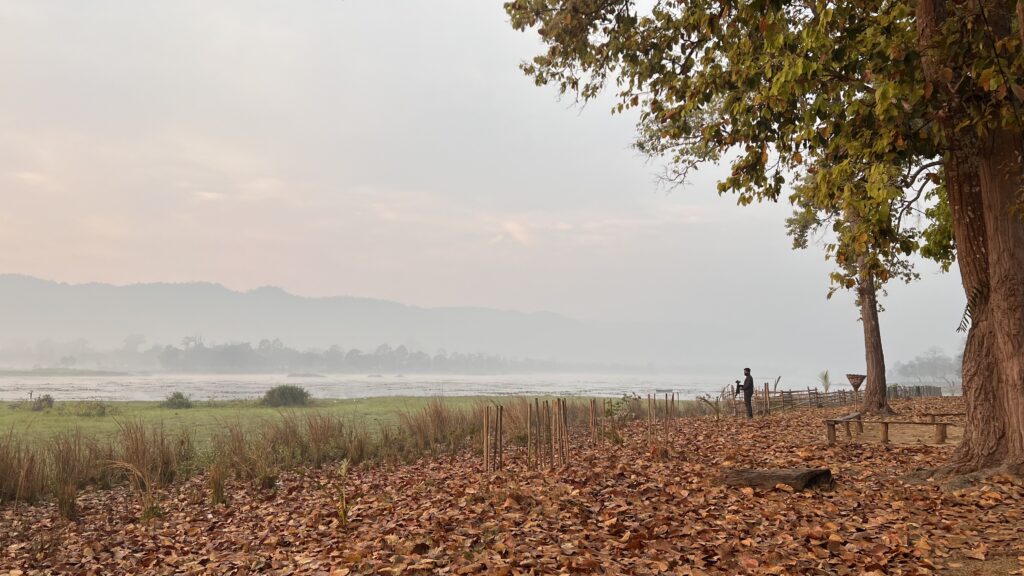
    Tucked at the foothills of Assam’s Garo hills, Chandubi Lake doesn’t announce itself with drama. It greets you with stillness. Bamboo groves sway, birds return without a fuss, and the lake reflects whatever the sky decides to be.

    There are no brochures waiting at the entrance. But if you listen closely — to the paddles, to the forest hush, to the fire crackling outside a villager’s home — Chandubi speaks.

    Waters That Remember

    Locals say the lake was born after the great earthquake of 1897 — when the earth cracked, and the forest filled with water. Since then, time here has been shaped by nature’s memory.

    Fishermen paddle silently, navigating the shallows with bamboo poles. Their boats are hand-carved, passed down through families. “You don’t force your way through this lake,” says Dijen, who’s been fishing here for 30 years. “You move with it.”

    A Place That Doesn’t Hurry”

    Footsteps in the Forest

    A short walk through nearby tribal villages reveals everyday life — drying herbs tied to windows, handwoven baskets, children returning from school across leaf-strewn paths. No curated experiences. No lens flare.

    In the dense patches of forest that surround the lake, birdcalls become markers of time. Hornbills, drongos, and orioles all have their space. Nature doesn’t pose here — it carries on.

    Snippets from the Shore

    • The Evening Circle:
      • At sundown, villagers often sit in quiet groups by the water — not to discuss business, but to share warmth. Sometimes in words, sometimes in silence.
    • The Bamboo Rudder:
      • A fisherman guides his dugout canoe with one pole and a quiet hum. “The lake doesn’t rush,” he smiles. “So I don’t either.”
    • The Tea Stall Conversation:
      • A woman named Bina pours red tea and recounts how they celebrate Bihu by the lake, not with fireworks, but with community plays and shared cooking.

    The Garo Influence

    Though in Assam, the lake is closely linked with the Garo community. The border culture here means songs sung in Garo blend with Assamese rhythms. Traditional dances happen not on stage, but in open courtyards during local events. And food — smoked fish, wild greens, and fermented bamboo shoots — speaks of this mingling.

    Know Before You Go: Travel Tips for Chandubi

    • Getting there: Around 60 km from Guwahati. Accessible by road — best during daylight hours.
    • When to visit: October to March offers dry skies and the clearest reflections.
    • What to carry: Binoculars, light woolens, respect for nature — and time.
    • Stay options: Rustic eco-campsites and a few village stays offer meals, stories, and slow mornings.

    Chandubi won’t ask for your attention — it simply welcomes your presence. There’s no itinerary to chase here, only moments to notice: a leaf falling, a ripple growing, a stranger smiling.

    Some places you capture in photos. Chandubi is one you carry quietly, like a calm that lingers.”