Category: People & Traditions

  • Guardians of the Green

    Guardians of the Green

    Tucked between the emerald hills of Nagaland, Khonoma isn’t just a village — it’s a pledge. A promise made generations ago to stop hunting indiscriminately, to stop felling forests endlessly, and to start living with the land, not just off it.

    Today, Khonoma stands not as a tourist spot but as India’s first Green Village — a living example of how tradition can lead the way in conservation.

    From Battlefield to Sanctuary

    In the 19th century, Khonoma was known for its fierce warriors who resisted British colonization. The same determination now protects its hills. In 1998, after decades of unsustainable hunting practices, the villagers voluntarily declared 70 square kilometers of their forest as the Khonoma Nature Conservation and Tragopan Sanctuary (KNCTS).

    This wasn’t government-imposed — it was community-willed. Today, you’ll still find traps, but they’re rusted, tied to trees as reminders of a past they chose to leave behind.

    The Tale of the Tragopan

    Khonoma was once the hunting ground of the Blyth’s Tragopan, a rare pheasant and Nagaland’s state bird. Its numbers were falling fast. But thanks to the conservation efforts, the birds are now being spotted again — timid, yes, but slowly trusting the silence of safety.

    “We used to hunt them to show bravery. Now we protect them to show wisdom,” shares Khonoma’s community elder.

    Snippets from the Forest

    • The Ziekiezou Trek:
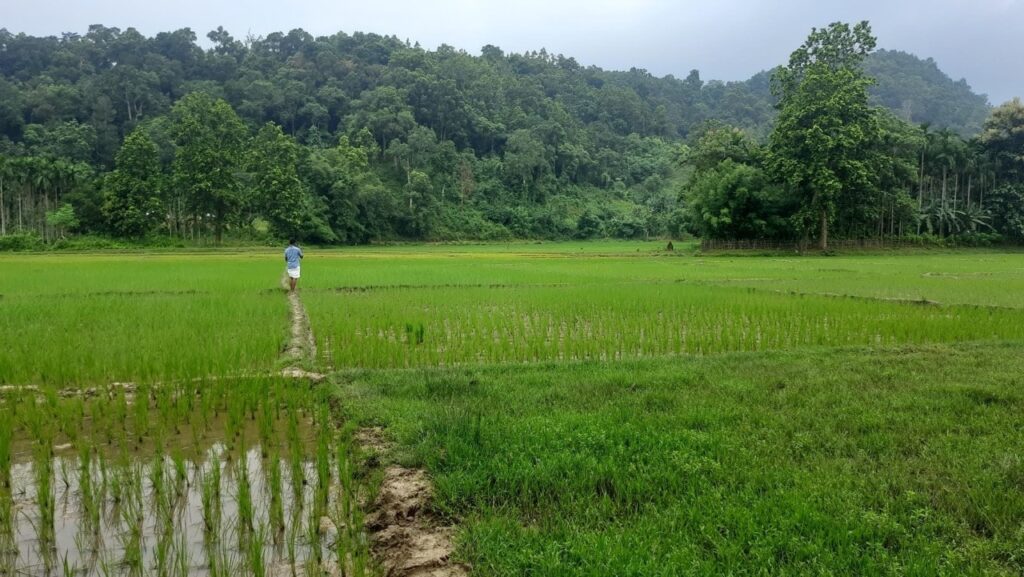
      This short but rich trail leads through sacred groves, whispering bamboo, and viewpoints overlooking rice terraces. Guided walks often include stories of medicinal herbs and ancestral boundaries marked by stones.
    • Woodsmoke & Watchtowers:
      Traditional Naga watchtowers once used to spot enemies are now used to sight hornbills. From up there, Khonoma unfolds like a green quilt stitched by generations.
    • No-Gun Generation:
      A new youth group proudly calls themselves the “No-Gun Boys.” They document birdlife, guide treks, and lead awareness drives in local schools.

    Know Before You Go

    • Permission required for KNCTS access: Most homestays can arrange it.
    • Best time: October to April for birdwatching and clear hikes.
    • Avoid plastic: The village practices strict eco-tourism policies.
    • Stay local: Homestays offer guided conservation walks and heritage meals.

    Khonoma didn’t wait for global campaigns or NGOs to fix its future. It looked inward. It chose to change — not to attract applause, but to protect its soul. And in doing so, it became a forest that speaks — not just in rustles and bird calls, but in choices.

    In Khonoma, every leaf is a lesson — not from textbooks, but from the hands that chose not to cut it.”
  • When the Hills Sing in Firelight

    When the Hills Sing in Firelight

    Cherrapunjee isn’t just about rains — it’s about rhythm. The same skies that pour generously in monsoons also clear up to reveal evenings filled with warmth, fire, and song. If you’ve only visited Cherrapunjee for the waterfalls, you’ve missed its true essence: the quiet joy of gathering.

    The Khasi people don’t celebrate with pomp — they celebrate with presence. Around hearths, beside ancient monoliths, or beneath the sacred groves, their festivals reflect deep harmony between humans, nature, and spirit.

    Nongkrem: More Than a Festival

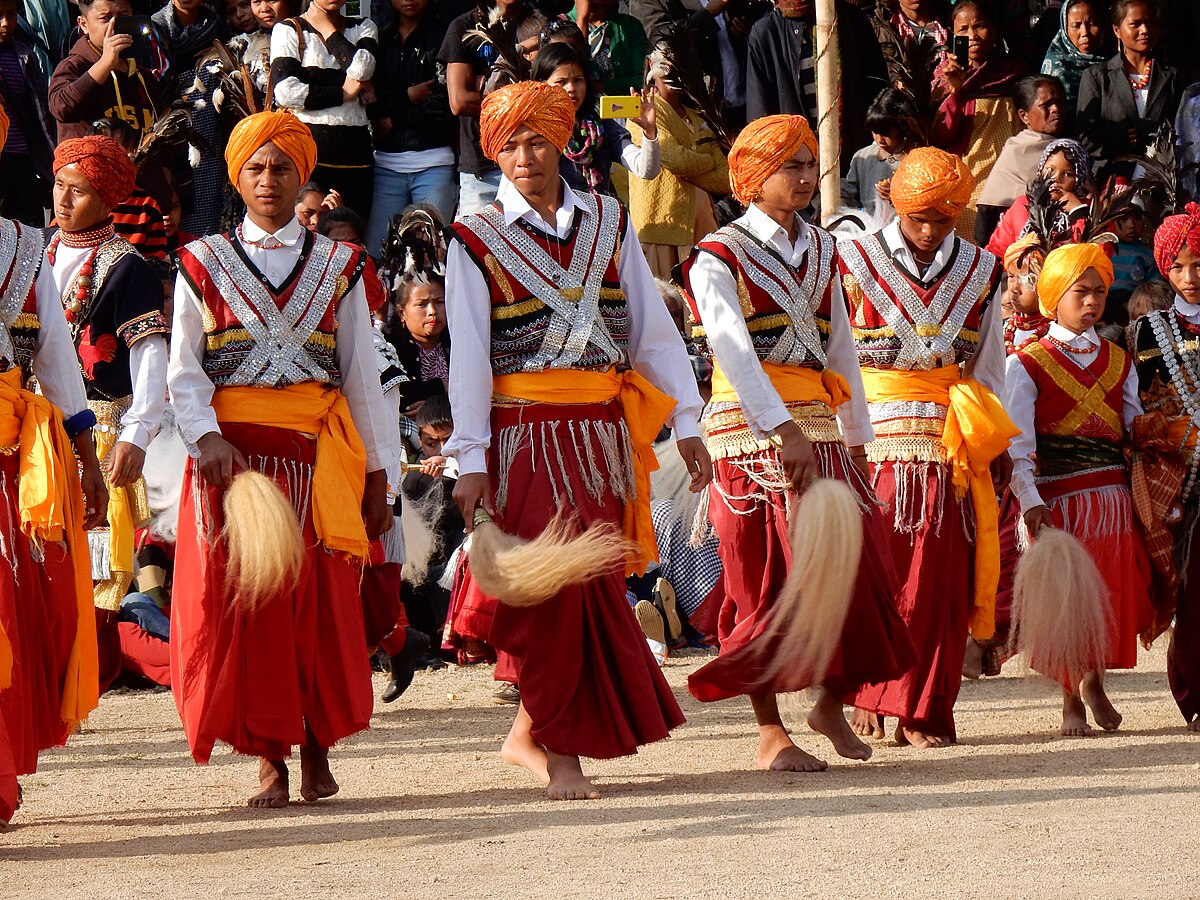
    Held annually near Cherrapunjee, the Nongkrem Dance Festival is not a performance — it is a ritual, a renewal of blessings. Held by the Syiem (chieftain) of the Hima Khyrim, this five-day festival seeks the blessings of Ka Blei Synshar, the Supreme Creator, for peace and prosperity.

    Women in ornate Jainsem and traditional gold and coral ornaments move with controlled grace, while men wield swords in rhythmic war dances. The festival takes place in Smit, a village not far from Cherrapunjee, but its spirit echoes through the plateau.

    “We don’t dance to be seen. We dance because it’s how we speak to the Divine,” a local elder explains.

    Fire at the Heart of Khasi Life

    In many Khasi homes, the hearth is sacred. During festivals and gatherings, fire becomes a companion — a silent witness to laughter, debates, and shared meals. On chilly nights, especially post-harvest, the community often gathers under the stars to sing folk songs, tell stories of ancestors, and cook rice beer.

    No sound system. No selfies. Just warmth, wind, and stories older than memory.

    Snippets from the Plateau

    • A Night at Mawmluh:
      Youngsters perform a moonlit skit about rain spirits — a mix of humour, folklore, and fierce pride.
    • Local Music at a Living Root Bridge:
      You’ll find an impromptu jam session of bamboo flutes and Khasi drums during quieter months — not for tourists, but for themselves.
    • The Monoliths of Mawsmai:
      Often mistaken for ruins, these stone structures are commemorative — every festival pays respects here.

    Know Before You Go

    • Festivals follow lunar cycles: Dates may shift — check with locals or homestays.
    • Dress modestly when attending rituals: Respect the sanctity of the space.
    • Photography may be restricted: Always ask before clicking during rituals.
    • Best season: November to January for Nongkrem and winter gatherings.

    In Cherrapunjee, fire doesn’t burn to impress. It glows to gather. When you sit around it with strangers who soon feel like kin, you realise — some of the best festivals aren’t public. They’re personal.

    In the hills of Cherrapunjee, joy doesn’t echo — it settles beside you, like warmth from a dying ember.”

  • Where the Smoke Adds Flavour

    Where the Smoke Adds Flavour

    Longwa isn’t just famous for straddling two countries — it also straddles two culinary worlds: one of ancestral hunting and one of seasonal cultivation. Here, the kitchen is a place of memory and muscle. The firewood burns slow, the meats cook slower, and nothing is ever rushed, not even hunger.

    In Longwa, every meal is a conversation between the land, the forest, and the hands that prepare it.

    Inside a Konyak Kitchen

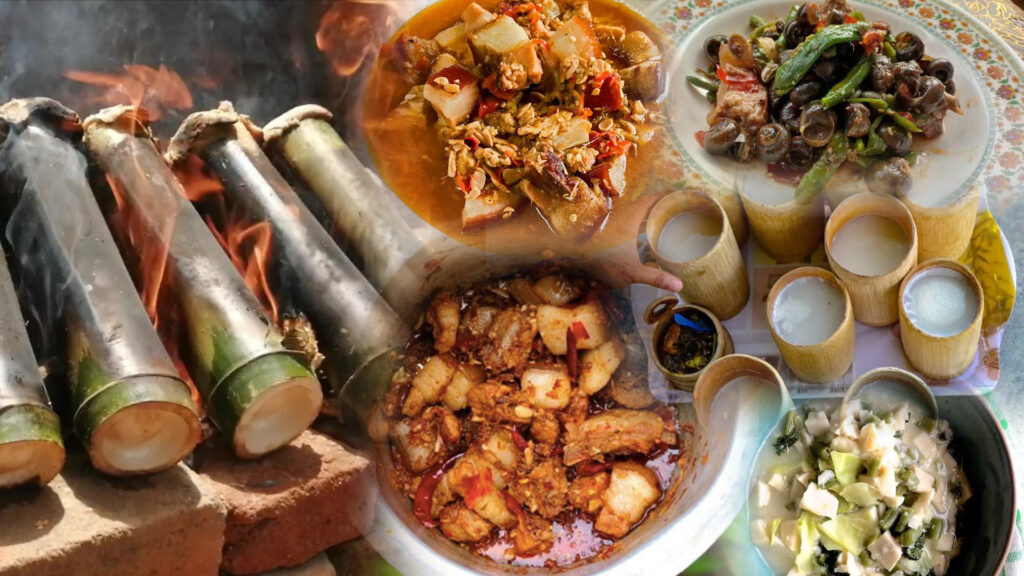
    You’ll smell it before you see it — the rich aroma of smoked meat wafting through wooden beams blackened by decades of fire. Most kitchens are elevated over ground, with platforms used for drying, curing, and preserving. There are no spices from the plains here — only salt, chilli, smoke, and intuition.

    Smoked pork is a staple, often stored for months above the hearth. Alongside are fermented soybeans (akin to akhuni), wild herbs, and rice from the jhum fields. The food may seem minimal, but it’s deeply layered — like the people.

    Must-Experience Local Flavours

    • Smoked Pork with Dry Bamboo Shoot: Sharp, bold, and comforting — this is soul food.
    • Sticky Red Rice: Grown locally, best enjoyed with hot chutney and meat.
    • Fermented Soybean Paste (Ngari-style): Served sparingly, but leaves an impression.
    • Snail Curry and Foraged Greens: A seasonal delicacy shared among family.

    A Meal With a View — and a Lesson

    At the village edge, overlooking Myanmar, you’ll often find a wood-and-thatch home where you’re offered a meal with minimal conversation. One host said, “You don’t speak while eating — you respect what it took to hunt, grow, and prepare.”

    Chilli That Brings Tears and Tales

    Every family has their secret chilli chutney — often involving ghost pepper (bhut jolokia), smoked tomatoes, and a lot of pride. When you ask for the recipe, they smile. “We don’t measure. The fire tells us.”

    Know Before You Go

    • Food may be non-vegetarian heavy: Ask respectfully if you have dietary preferences.
    • Eat what’s offered: Refusing food is seen as declining a relationship.
    • Don’t look for ‘organic’ labels: Everything here already is.

    In Longwa, food isn’t cooked — it’s crafted. Each dish is a product of time, terrain, and trust. To eat here is to be let in — not just into a home, but into a way of life.

    In Longwa, the fire cooks more than food — it shapes belonging.”

  • Flavours of the Forest at Chandubi

    Flavours of the Forest at Chandubi

    Chandubi is not where you go for restaurant reviews — it’s where the food finds you. In the rhythms of forest walks, in the slow smoke curling from a bamboo hut, and in the stories of grandmothers who never wrote a recipe but remember every taste. The food here doesn’t just nourish; it roots you.

    Most kitchens in the villages around Chandubi spill into courtyards. Cooking happens over firewood, beside banana leaves, with dogs dozing nearby and children peeling betel nuts. The menu? Wild greens foraged that morning, fresh fish from Chandubi lake, mustard-flavored everything, and rice — always rice.

    The Khasis, Garos, Rabhas, and Assamese people living around the area share overlapping culinary languages, yet each has its accents. From bamboo shoot-infused pork to the delicate sourness of the tenga (sour curry), the plate is a quiet rebellion against packaged taste.

    Specialties You Should Try

    • Bamboo Shoot with Fish/Pork:
      • Fermented bamboo shoot adds sharpness to a dish that simmers slowly.
    • Khar:
      • A traditional alkaline dish made with raw papaya, pulses, and banana stem ash — a signature Assamese touch.
    • Poita Bhat:
      • Fermented rice eaten cold, with mustard oil, onion, and chillies — a meal for the body, and memory.
    • Tenga Curry with Lake Fish:
      • Light and tangy, this is a bowl of Chandubi’s water, soul, and sunshine.

    A Morning at the Weekly Market

    The Chandubi weekly haat is a crash course in seasonal abundance. Wild mushrooms, red ants, silk cocoons, and sticky rice cakes share space with stories and gossip. This isn’t a place to bargain — it’s a place to learn. One elder said, “Food that grows here knows what we need before we do.”

    A Tea Break with Something More

    Near the lake, an elderly woman serves black tea in reused glass tumblers. She offers puffed rice and jaggery. “This is not snack,” she smiles. “This is memory.”

    Know Before You Go

    • Ask before clicking: Respect the kitchen space; many households are private and sacred.
    • Don’t expect menus: The best meals are what’s already cooking.
    • Carry reusable containers: You might get offered leftovers — that’s love in a bowl.

    Chandubi teaches us that food isn’t always plated; sometimes, it’s shared over laughter and silence. It’s smoke, spice, and generosity — passed not down but around.

    In some places, you eat to fill. In Chandubi, you eat to feel.”

  • Stories Flow Beneath the Surface

    Stories Flow Beneath the Surface

    Jowai, the heart of the Pnar people in Meghalaya’s West Jaintia Hills, is known for its tranquil charm — but beneath the stillness, there are stories layered like the riverbed of Myntdu. The locals say the river listens. It hears everything: prayers whispered into the wind, songs sung from betel-stained lips, the language of forests carried by bamboo flutes.

    This isn’t a place that explains itself. It invites you to stay long enough until the patterns reveal themselves.

    Ancestral Altars and Everyday Life

    Jowai isn’t frozen in the past — but its traditions breathe through daily life. In small courtyards, families light fires near monoliths for private rituals. Grandmothers recount legends of U Sajar Nangli while weaving cane baskets. There’s no ceremony to it. Culture is not performance here — it’s presence.

    Local Voices, Local Ways

    • The Weaver’s Wisdom:
      In Raliang village, a weaver says, “Our threads don’t follow fashion. They follow stories. Every motif has a meaning — it speaks of rain, harvest, or loss.”
    • Betel Nut Trails:
      All across Jowai, betel nut trees line paths and fields. They’re not just crops — they’re companions in rituals, offerings, and conversation.
    • The Rhythm of Rites:
      Traditional drumbeats at Niamtre ceremonies don’t seek an audience. They seek the ancestors. Outsiders are welcome, but not entertained — a distinction that makes all the difference.

    Interesting Insight: Myntdu is Sacred

    The Water Keeps the Memory”

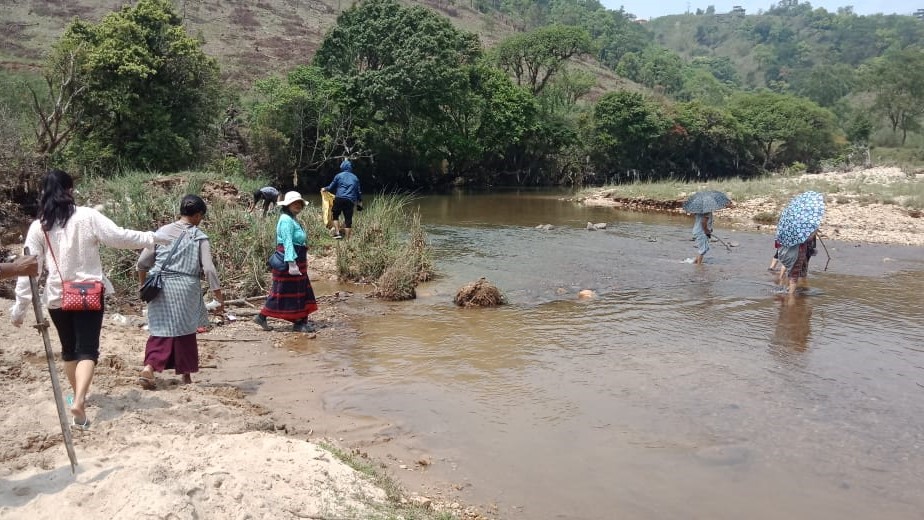
    The Myntdu River is considered sacred by the Jaintia people. It is not just a water source — it is spoken to before rituals, crossed with care, and never disrespected. Some villages forbid washing clothes in it. The respect is not mandated — it’s inherited.

    A cleaning drive on the Mytundu River by the locals

    Know Before You Go: Travel Tips for Jowai

    • Getting there: About 65 km from Shillong by road. The drive winds through pine forests and waterfalls.
    • When to visit: Winter (Nov–Feb) for dry days, or monsoon (Jun–Sep) for misty magic and festivals.
    • Must-see: Tyrshi Falls, Thadlaskein Lake, Jowai market (especially on market day), Nartiang Monoliths.
    • Where to stay: Simple homestays around Jowai or nearby resorts toward Thadlaskein offer peaceful options.

    Jowai doesn’t unfold like a destination. It deepens like a conversation. One you may not fully understand, but one you’ll feel echoing long after the drive back.

    Not every journey shows you the world — some teach you how to listen to it.”