Category: Longwa

  • Where the Smoke Adds Flavour

    Where the Smoke Adds Flavour

    Longwa isn’t just famous for straddling two countries — it also straddles two culinary worlds: one of ancestral hunting and one of seasonal cultivation. Here, the kitchen is a place of memory and muscle. The firewood burns slow, the meats cook slower, and nothing is ever rushed, not even hunger.

    In Longwa, every meal is a conversation between the land, the forest, and the hands that prepare it.

    Inside a Konyak Kitchen

    You’ll smell it before you see it — the rich aroma of smoked meat wafting through wooden beams blackened by decades of fire. Most kitchens are elevated over ground, with platforms used for drying, curing, and preserving. There are no spices from the plains here — only salt, chilli, smoke, and intuition.

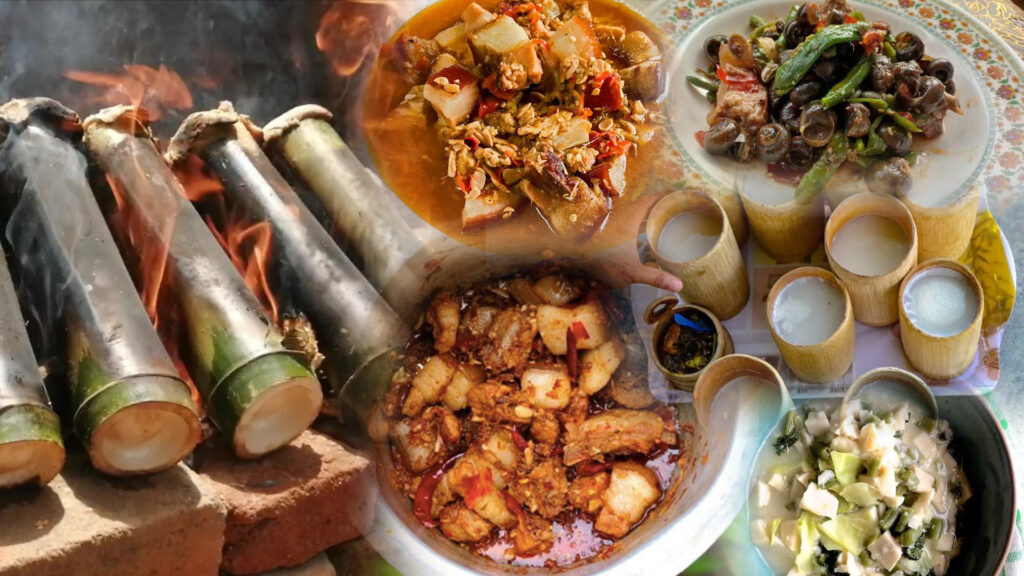
    Smoked pork is a staple, often stored for months above the hearth. Alongside are fermented soybeans (akin to akhuni), wild herbs, and rice from the jhum fields. The food may seem minimal, but it’s deeply layered — like the people.

    Must-Experience Local Flavours

    • Smoked Pork with Dry Bamboo Shoot: Sharp, bold, and comforting — this is soul food.
    • Sticky Red Rice: Grown locally, best enjoyed with hot chutney and meat.
    • Fermented Soybean Paste (Ngari-style): Served sparingly, but leaves an impression.
    • Snail Curry and Foraged Greens: A seasonal delicacy shared among family.
    A Meal With a View — and a Lesson

    At the village edge, overlooking Myanmar, you’ll often find a wood-and-thatch home where you’re offered a meal with minimal conversation. One host said, “You don’t speak while eating — you respect what it took to hunt, grow, and prepare.”

    Chilli That Brings Tears and Tales

    Every family has their secret chilli chutney — often involving ghost pepper (bhut jolokia), smoked tomatoes, and a lot of pride. When you ask for the recipe, they smile. “We don’t measure. The fire tells us.”

    Know Before You Go

    • Food may be non-vegetarian heavy: Ask respectfully if you have dietary preferences.
    • Eat what’s offered: Refusing food is seen as declining a relationship.
    • Don’t look for ‘organic’ labels: Everything here already is.

    In Longwa, food isn’t cooked — it’s crafted. Each dish is a product of time, terrain, and trust. To eat here is to be let in — not just into a home, but into a way of life.

    In Longwa, the fire cooks more than food — it shapes belonging.”

  • Between Two Lands

    Between Two Lands

    A Village Divided by a Line, Not by Living”

    Longwa, perched in the Mon district of Nagaland, is often introduced by its geopolitical curiosity — a village where one house sits in India and its backyard in Myanmar. But that’s just the beginning. What truly divides and unites here isn’t borders — it’s belonging.

    The Angh (chief)’s house, famously straddling the international boundary, is less a political statement and more a symbol of coexistence. His rule still echoes through multiple villages across both sides of the border, rooted in tribal governance and oral authority.

    Longwa doesn’t offer touristy distractions. No souvenir shops, no curated shows. What you get is a walk through history, pride, and resilience — with muddy boots and smoky kitchens for company.

    The Konyak Ink

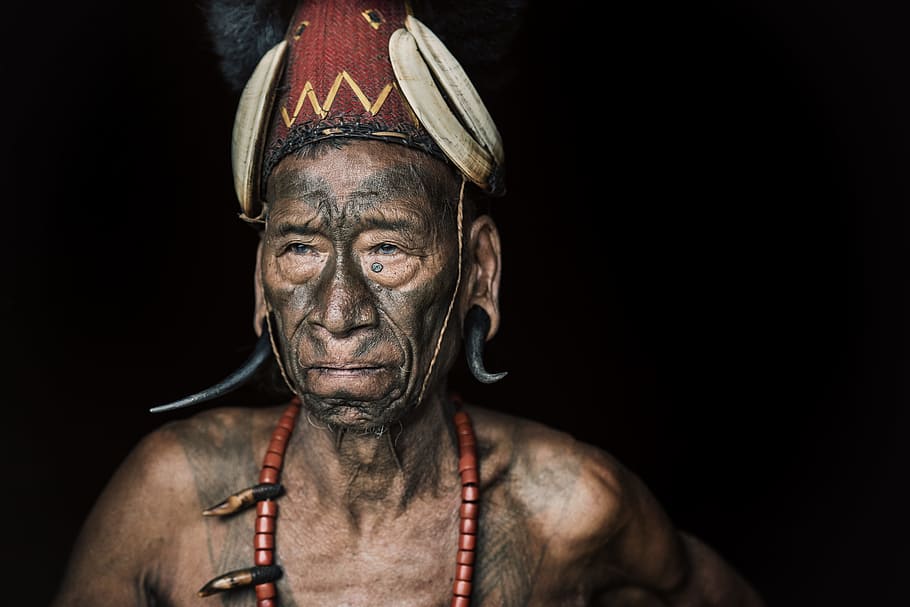
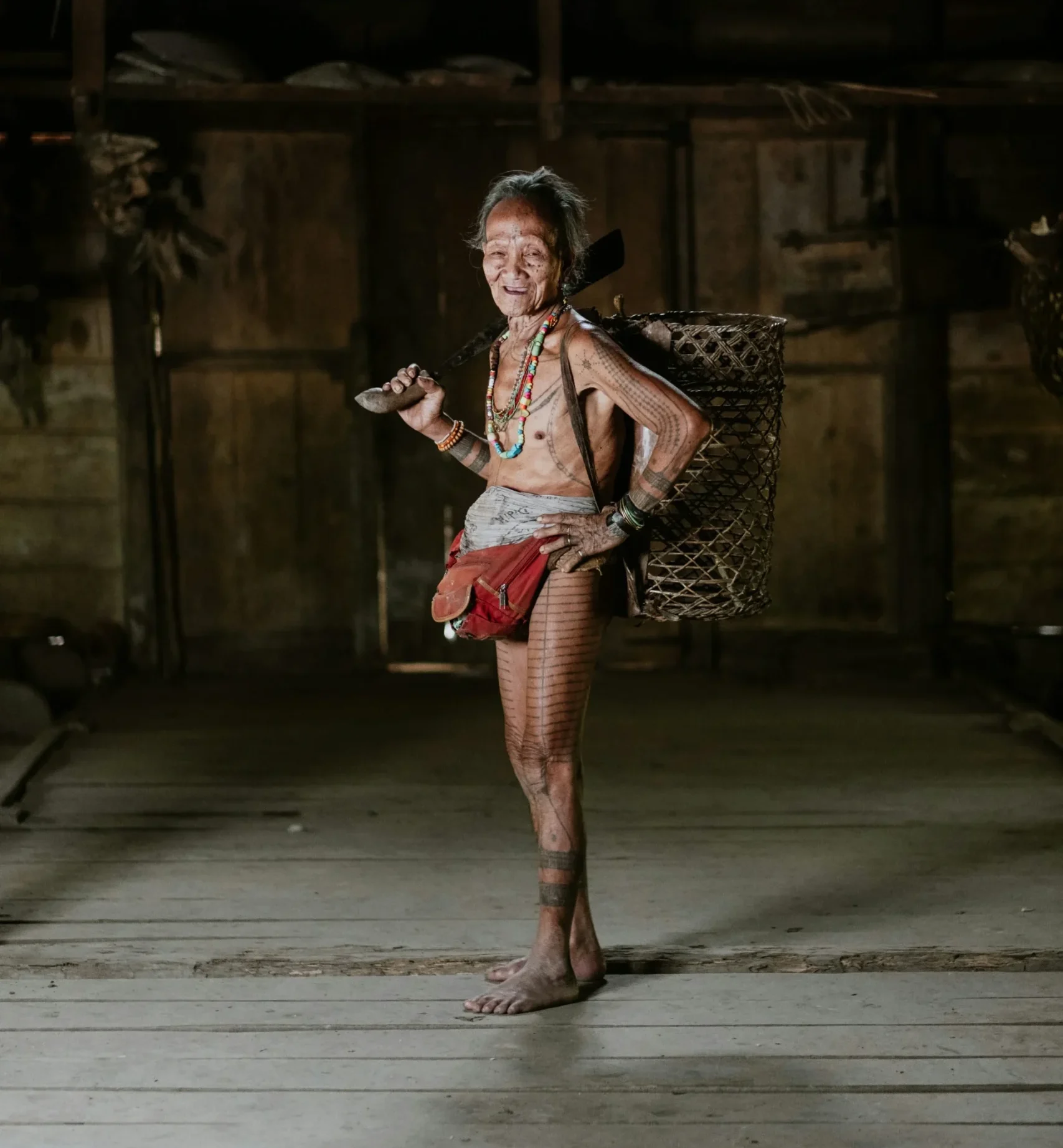
    The Konyaks, the dominant tribe in Longwa, are known across India for their distinctive facial and body tattoos, once earned after headhunting expeditions — a practice long abandoned, but not forgotten.

    These tattoos aren’t ornaments — they’re identities. Even today, the elders carry them like historical archives etched in blue-black ink.

    “Every mark has a meaning,” says a retired schoolteacher. “It tells where we’ve been. And who we were before the world knew us.”

    Longwa’s School of Wood and Smoke

    If you sit long enough in one of Longwa’s kitchens, you’ll notice the walls aren’t just dark from soot. They’re repositories. Antlers hang near hand-carved utensils, beside wooden rifles, above dried herbs. Each object speaks — of the hunt, of the harvest, of the hands that held them.

    Carving here is not a craft — it’s a skill passed through chores. Children whittle twigs into flutes; young men carve gun butts with tribal symbols. No formal schooling needed. The forest provides both material and metaphor.

    Snippets from the Village

    • The Border as a Backyard:
      Locals cross into Myanmar to attend family weddings or collect firewood — no fuss, no checkpoints, just old footpaths and older ties.
    • The Bamboo Telegraph:
      News here travels by mouth, often over log drums that once signaled warnings but now gather youth for village meetings and celebrations.
    • Meals of Memory:
      Smoked pork, sticky rice, bitter wild leaves — cooked slow and eaten slower. Meals are communal, layered with silence, stories, and salt.

    Know Before You Go: Travel Notes

    • How to Reach: Drive from Mon town, about 40 km. Roads are winding and rough — 4x4s are preferred.
    • Best Time: October to April, when the skies are clear and the village rituals are most active.
    • Where to Stay: Basic homestays exist — warm in welcome, modest in amenities.
    • Respect Boundaries: Ask before taking photos, especially of elders. Privacy is held sacred here.

    Longwa doesn’t dwell on its past, nor does it chase modernity. It stands — in the mist, in the hills — as it always has. A village where lines drawn on maps matter less than the ones etched in memory.

    Some places teach you geography. Longwa teaches you to unlearn it.”

  • Where Borders Blur: A Glimpse into Longwa, Nagaland

    Where Borders Blur: A Glimpse into Longwa, Nagaland

    Perched high in the Mon district of Nagaland, Longwa is a village unlike any other. Here, geography bends to the rhythm of culture — quite literally. The house of the Angh (village chief) famously straddles the international border between India and Myanmar. Sit on one end of his porch and you’re in India, swing your legs to the other and you’ve stepped into Myanmar — no passport needed, just a respectful heart.

    The Konyaks: Warriors, Woodcraft, and Warmth

    Longwa is home to the Konyak Nagas — once fierce headhunters, now fierce preservers of heritage. Their tattoos, etched in deep indigo across faces and torsos, are not just body art but chronicles of valor, rites of passage, and ancestral pride.

    Today, these same hands — once used in tribal warfare — carve intricate woodwork, shape guns by hand (yes, still), and tend to fields stretching into the horizon. As tourism grows, some men still wear their traditional ornaments, not for show, but for the pride of being seen — as Konyak.

    But Longwa’s real uniqueness isn’t in this novelty. It’s in its people.”

    Life in a Village that Knows No Borders

    There are no immigration checks in Longwa. The village lives between two countries but inside one rhythm. The local dialect, Konyak, is spoken fluently on both sides. Children attend school in India, but often visit family in Myanmar by afternoon.

    Electricity is sporadic, but the warmth of human connection here is constant. Meals are shared, stories are passed over firewood, and even as concrete tries to enter, bamboo still holds the soul of the homes. Connectivity might be low, but community isn’t.

    Ethical Curiosity: What it Means to Visit Longwa

    Longwa invites curiosity, but it demands care. This isn’t a tourist site to “check off.” It’s a living, breathing community shaped by shifting geopolitics, history, and a powerful sense of place.

    If you go, speak less and listen more. Buy local handicrafts without bargaining, ask before photographing elders, and remember — the best souvenir from Longwa isn’t a trinket, but the stories you carry home.

    Not all borders divide. Some simply remind us how connected we already are.”