Category: Local Legends

  • Where the Smoke Adds Flavour

    Where the Smoke Adds Flavour

    Longwa isn’t just famous for straddling two countries — it also straddles two culinary worlds: one of ancestral hunting and one of seasonal cultivation. Here, the kitchen is a place of memory and muscle. The firewood burns slow, the meats cook slower, and nothing is ever rushed, not even hunger.

    In Longwa, every meal is a conversation between the land, the forest, and the hands that prepare it.

    Inside a Konyak Kitchen

    You’ll smell it before you see it — the rich aroma of smoked meat wafting through wooden beams blackened by decades of fire. Most kitchens are elevated over ground, with platforms used for drying, curing, and preserving. There are no spices from the plains here — only salt, chilli, smoke, and intuition.

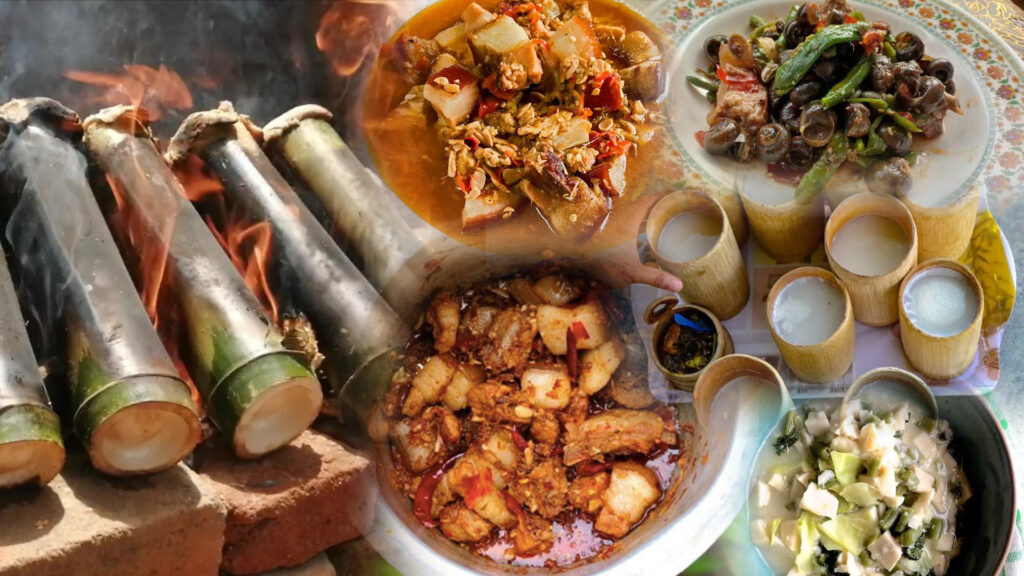
    Smoked pork is a staple, often stored for months above the hearth. Alongside are fermented soybeans (akin to akhuni), wild herbs, and rice from the jhum fields. The food may seem minimal, but it’s deeply layered — like the people.

    Must-Experience Local Flavours

    • Smoked Pork with Dry Bamboo Shoot: Sharp, bold, and comforting — this is soul food.
    • Sticky Red Rice: Grown locally, best enjoyed with hot chutney and meat.
    • Fermented Soybean Paste (Ngari-style): Served sparingly, but leaves an impression.
    • Snail Curry and Foraged Greens: A seasonal delicacy shared among family.
    A Meal With a View — and a Lesson

    At the village edge, overlooking Myanmar, you’ll often find a wood-and-thatch home where you’re offered a meal with minimal conversation. One host said, “You don’t speak while eating — you respect what it took to hunt, grow, and prepare.”

    Chilli That Brings Tears and Tales

    Every family has their secret chilli chutney — often involving ghost pepper (bhut jolokia), smoked tomatoes, and a lot of pride. When you ask for the recipe, they smile. “We don’t measure. The fire tells us.”

    Know Before You Go

    • Food may be non-vegetarian heavy: Ask respectfully if you have dietary preferences.
    • Eat what’s offered: Refusing food is seen as declining a relationship.
    • Don’t look for ‘organic’ labels: Everything here already is.

    In Longwa, food isn’t cooked — it’s crafted. Each dish is a product of time, terrain, and trust. To eat here is to be let in — not just into a home, but into a way of life.

    In Longwa, the fire cooks more than food — it shapes belonging.”

  • Where Rain Writes the Rules

    Where Rain Writes the Rules

    When the Sky is a Storyteller”

    Cherrapunjee isn’t just about heavy rainfall. It’s about how people live with the rain — not against it. It’s one of the few places where weather becomes a part of memory. Here, conversations pause mid-sentence when the rain thickens. Tea tastes better under tin roofs. Children play barefoot in puddles — because wet isn’t a nuisance, it’s a way of life.

    The Khasi call this land Sohra — a name that lives in lullabies, local legends, and laughter.

    Living Bridges, Living Patience

    One of the most iconic gifts of Cherrapunjee is its living root bridges. These are not made — they are grown. Over decades, villagers guide the roots of the Ficus elastica tree across streams until they take shape and strength.

    They’re not for show — they’re used by schoolchildren, farmers, elders. Each bridge is a lesson in time, resilience, and care — no shortcuts, no urgency.

    We never asked the trees to hurry,” says Sukher, a local guide. “The forest taught us to wait.”

    Snippets in the Mist

    • The Hills Echo Differently:
    • In some corners, you’ll hear folk songs carried across valleys. They’re not sung loud — they’re meant for those who listen.
    • The Orange Vendor by the Cliff:
    • He doesn’t just sell fruit. He explains which tree it came from, when it was picked, and how the skin makes a great face pack. Everything here comes with a story.
    • Monoliths in the Grass:
    • Scattered across meadows, they stand like old sentinels. Some say they mark ancient clan gatherings, others call them waypoints for the soul. No one knows for sure — and maybe that’s the beauty.

    Interesting Insight: Rain as Ritual

    Locals in Sohra don’t treat rain as a problem to escape. Rain festivals, traditional homes with slit ventilation, rain-harvesting pits — all speak of a lifestyle tuned to monsoon rhythms. Many Khasi folktales even begin with the weather — as if the sky is the first narrator.

    Know Before You Go: Travel Tips for Cherrapunjee

    • Getting there: Around 55 km from Shillong by road. The drive itself is scenic, especially during monsoon.
    • Best time to visit: October to May for clearer skies; June to September for dramatic monsoon beauty.
    • What to explore: Arwah Caves, Nohkalikai Falls, Double Decker Root Bridge (Tyrna), local Khasi cuisine.
    • Stay options: Homestays in Laitkynsew or eco-lodges around Tyrna offer comfort with intimacy.

    Cherrapunjee doesn’t put on a show — it simply exists with quiet power. Every sound, every step, every shade of mist has a place. Here, rain doesn’t stop life. It writes it.

    In Cherrapunjee, even silence has a rhythm — and the clouds know it by heart.”

  • The Quiet Lake Beneath the Hills

    The Quiet Lake Beneath the Hills

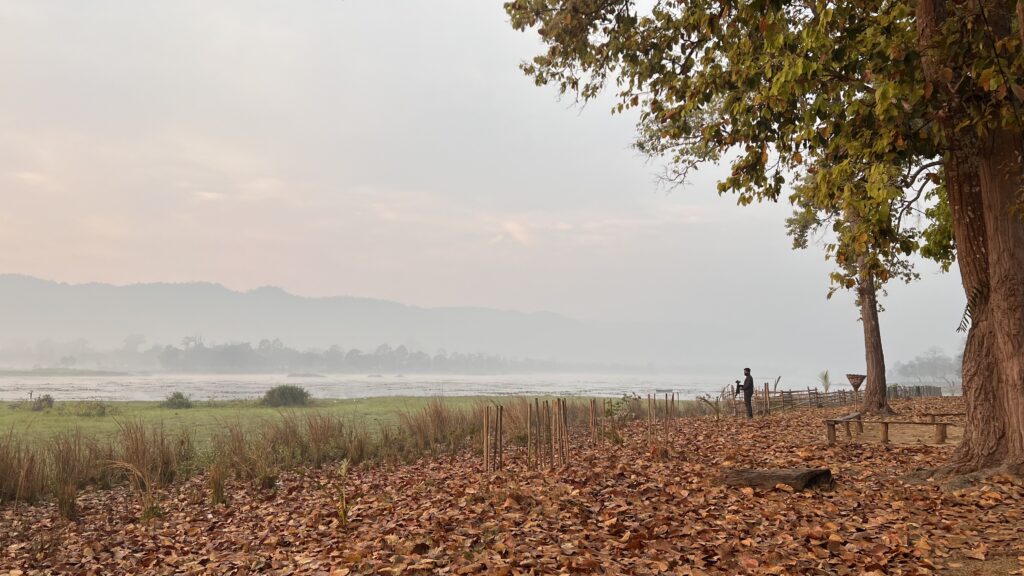
    Tucked at the foothills of Assam’s Garo hills, Chandubi Lake doesn’t announce itself with drama. It greets you with stillness. Bamboo groves sway, birds return without a fuss, and the lake reflects whatever the sky decides to be.

    There are no brochures waiting at the entrance. But if you listen closely — to the paddles, to the forest hush, to the fire crackling outside a villager’s home — Chandubi speaks.

    Waters That Remember

    Locals say the lake was born after the great earthquake of 1897 — when the earth cracked, and the forest filled with water. Since then, time here has been shaped by nature’s memory.

    Fishermen paddle silently, navigating the shallows with bamboo poles. Their boats are hand-carved, passed down through families. “You don’t force your way through this lake,” says Dijen, who’s been fishing here for 30 years. “You move with it.”

    A Place That Doesn’t Hurry”

    Footsteps in the Forest

    A short walk through nearby tribal villages reveals everyday life — drying herbs tied to windows, handwoven baskets, children returning from school across leaf-strewn paths. No curated experiences. No lens flare.

    In the dense patches of forest that surround the lake, birdcalls become markers of time. Hornbills, drongos, and orioles all have their space. Nature doesn’t pose here — it carries on.

    Snippets from the Shore

    • The Evening Circle:
      • At sundown, villagers often sit in quiet groups by the water — not to discuss business, but to share warmth. Sometimes in words, sometimes in silence.
    • The Bamboo Rudder:
      • A fisherman guides his dugout canoe with one pole and a quiet hum. “The lake doesn’t rush,” he smiles. “So I don’t either.”
    • The Tea Stall Conversation:
      • A woman named Bina pours red tea and recounts how they celebrate Bihu by the lake, not with fireworks, but with community plays and shared cooking.

    The Garo Influence

    Though in Assam, the lake is closely linked with the Garo community. The border culture here means songs sung in Garo blend with Assamese rhythms. Traditional dances happen not on stage, but in open courtyards during local events. And food — smoked fish, wild greens, and fermented bamboo shoots — speaks of this mingling.

    Know Before You Go: Travel Tips for Chandubi

    • Getting there: Around 60 km from Guwahati. Accessible by road — best during daylight hours.
    • When to visit: October to March offers dry skies and the clearest reflections.
    • What to carry: Binoculars, light woolens, respect for nature — and time.
    • Stay options: Rustic eco-campsites and a few village stays offer meals, stories, and slow mornings.

    Chandubi won’t ask for your attention — it simply welcomes your presence. There’s no itinerary to chase here, only moments to notice: a leaf falling, a ripple growing, a stranger smiling.

    Some places you capture in photos. Chandubi is one you carry quietly, like a calm that lingers.”

  • Listening to the Edges in Menchuka

    Listening to the Edges in Menchuka

    Far in the folds of Arunachal Pradesh, where the land becomes hush before turning into Tibet, sits Menchuka — a small town that doesn’t rise like a destination but settles like a revelation. Surrounded by pine-clad hills, slivers of blue rivers, and quiet military roads, Menchuka balances solitude and surprise like few places can.

    The name ‘Menchuka’ loosely translates to “medicinal water of snow” — and the place lives up to it. Clean, high-altitude air. Springs that trickle with silence. Paths that lead not to landmarks but to feelings — of distance, resilience, and welcome.

    Alo People and Their Everyday Grace

    Menchuka is home to the Memba tribe, and nearby, to the Adi and Tagin communities. Here, hospitality isn’t a gesture — it’s woven into the daily rhythm. You’ll be invited in not with grand gestures, but with butter tea, laughter, and warmth that fills more than your hands.

    Traditional houses made from wood, stone, and bamboo overlook fields of barley and maize. Monasteries dot the hills, and in their prayer flags, the breeze carries centuries of quiet faith. Local kids play barefoot with sticks as cricket bats. Dogs bark at the wind, not at strangers. There’s no urgency to perform — and that’s what makes it beautiful.

    A Village Framed by Borders, Held Together by Belonging”

    Between Army Camps and Apple Orchards

    Menchuka stands close to the Indo-Tibet border — and the presence of the military is unavoidable. Yet, it doesn’t overshadow life; it blends in. Soldiers wave at locals, help repair bridges, buy from village stores. It’s one of the few places where camouflage uniforms and monk robes share the same footpaths.

    Meanwhile, in September and October, apple trees heavy with fruit bend near monasteries. In winter, the same roads are blanketed in snow — and the silence becomes deeper, almost sacred.

    Three Unusual Observations from Menchuka

    • Handwoven Textiles with Personal Codes:
      Traditional dresses often contain symbols woven by the weaver to reflect their personal story or beliefs — not visible to all, but meaningful to those who know where to look.
    • Oral Mapping Instead of Signboards:
      Locals don’t give directions with “left” or “right” — they tell you to turn “after the house with three prayer wheels,” or “beyond the sleeping dog corner.” It teaches you to observe, not just follow.
    • Monasteries That Smell of Juniper and Books:
      The Samten Yongcha monastery, older than any map you’ll carry, welcomes you not with grandeur but with incense, dusty prayer books, and chants that don’t demand understanding — only attention.

    When in Menchuka, Remember…

    • Best time to visit: March to May for greenery and October for golden harvests.
    • How to reach: By road via Aalo (a long journey best done in stages), or by helicopter from Itanagar (weather permitting).
    • Where to stay: Local homestays are often run by teachers, farmers, or retired army men. You’ll leave with stories, not just receipts.
    • Don’t miss: The 400-year-old Samten Yongcha Gompa perched on a cliff, and an early morning walk by the Siyom River when the fog hasn’t fully left.

    Menchuka doesn’t try to impress you. It offers space — to reflect, to connect, to walk slow, and to feel small in a good way. The quiet here is not an absence, but a depth — where stories aren’t told loudly, but land gently in your memory.

    In places where the road ends, something else begins — in Menchuka, it’s the sound of stillness you’ll remember.”

  • Culture, Farming, and Apatani Tribe of Ziro

    Culture, Farming, and Apatani Tribe of Ziro

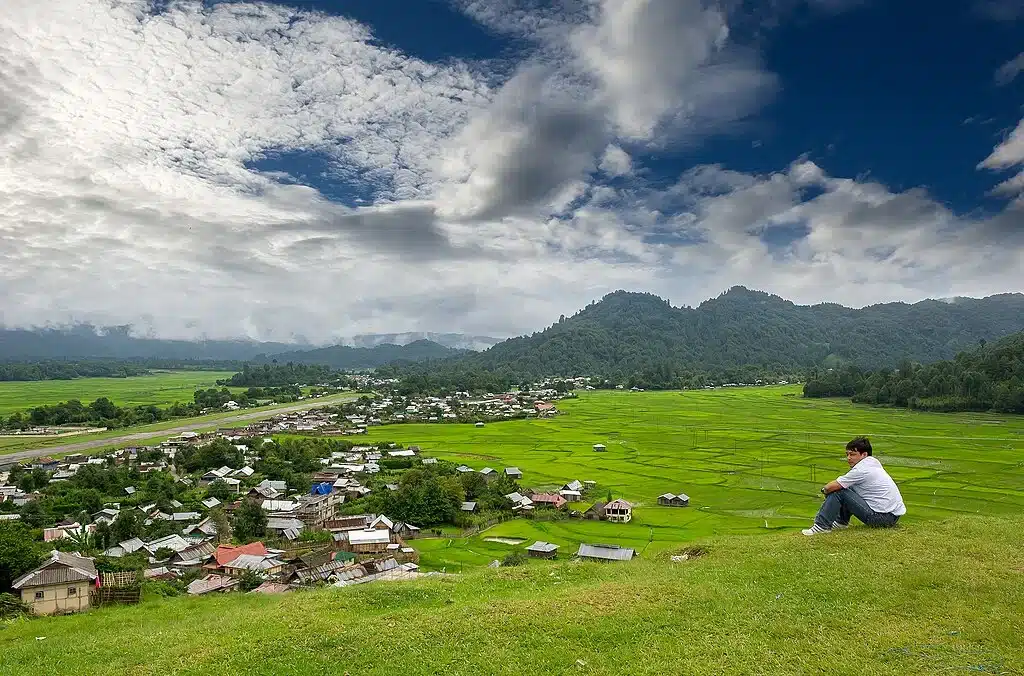
    Tucked amidst pine ridges and misty fields, Ziro in Arunachal Pradesh is not just scenic — it’s deeply lived in. The valley isn’t curated for visitors; it’s cultivated for its people. The Apatani community, who have been shaping this land for generations, follow a way of life rooted in sustainability, subtlety, and strength.

    Here, farming isn’t just labor — it’s knowledge. Walk past a Ziro paddy field and you’ll see fish swimming between rice stems — an ingenious paddy-cum-fish cultivation system that maintains soil fertility and food security without synthetic inputs. Not a technique invented in labs — but a practice born of patience and observation.

    A Landscape that Grows with Its People”

    The Apatani Way: Tied to Earth, Time and Memory

    Every home in Ziro feels like it belongs to the land. Made of pinewood and set on stilts, Apatani houses are often built by the family itself. Look closer at the woodwork, and you’ll find motifs — suns, birds, hornbills, spirals — symbols passed down generations. These aren’t decorative; they’re communicative, echoing stories of nature, protection, and identity.

    The older generation of women, with facial tattoos and cane nose plugs, carry a history both personal and political — a symbol of resilience from a time when cultural identity meant survival. Today, fewer youth continue this tradition, but the pride remains intact, alive in their festivals, songs, and daily rituals.

    Ziro’s Natural Quiet Isn’t Empty — It’s Full

    There’s something rare about Ziro’s silence. Not the absence of sound, but the absence of noise. You’ll hear footsteps on dry leaves, the whoosh of a bamboo swing, the echo of wood being chopped, the low hum of conversations between neighbours.

    Birdsong is a big part of this landscape. Ziro is part of the Important Bird Area network — a haven for birds like the rare Blyth’s Tragopan. But bird-watching here doesn’t feel like a tour — it feels like being let in on a quiet secret.

    Community First: Shared Work, Shared Joy

    In Ziro, most activities — from repairing roofs to planting fields — are collective. It’s not just about efficiency; it’s about spirit. During Murung, the major festival, villagers gather to bless harvests and honour ancestors. The celebrations are marked by ceremonial mithun sacrifices, songs that recount lineage, and feasts where every visitor is welcome — not just as a guest, but as someone to share with.

    Evenings here aren’t for nightlife. They’re for long walks, over meals cooked in bamboo tubes, and for watching fireflies settle into the forests.

    Travel Tip: Be Curious, Not Just Present

    • Getting there: Ziro is accessible by road via Naharlagun (nearest railhead) or Lilabari (nearest airport). Expect long, winding roads — and incredible views.
    • Best time to visit: March to May (for spring beauty), or September for the Ziro Music Festival.
    • Stay options: Opt for homestays that offer cultural immersion over luxury. Hosts are usually happy to share stories, food, and time — if you ask with interest.
    • What to bring: Walking shoes, rain protection, and an open mind.

    Ziro isn’t about what’s missing from urban life. It’s about what’s quietly endured — harmony with nature, respect for rhythm, and dignity in tradition. Spend a few days here and you don’t feel detached from the world — you feel reattached to something you may have forgotten.

    Somewhere between the hills and hands that tend them, Ziro reminds you how to be human again.”