Category: Living Rivers

  • When the Earth Cracks, We Stay

    When the Earth Cracks, We Stay

    Majuli isn’t just the world’s largest river island. It’s also one of its most vanishing.

    Year after year, the Brahmaputra rises. Land disappears. Homes shift. Temples lean. And yet, the people of Majuli remain. Not because they have no choice — but because they choose to belong, again and again.

    This blog isn’t just about land lost. It’s about what refuses to be erased.


    It’s not about what to see in Majuli — it’s about how not to look away.

    “This is not just land. This is where our gods speak, where our crops pray, where our stories wake up each morning,” says an elder in Kamalabari.

    A Geography That Moves

    Majuli was once over 1,200 square kilometers. Today, it’s less than 500. The Brahmaputra’s floods aren’t rare disasters here — they’re seasonal certainties. Each monsoon redraws the map. Villages shift. Roads vanish. People adapt.

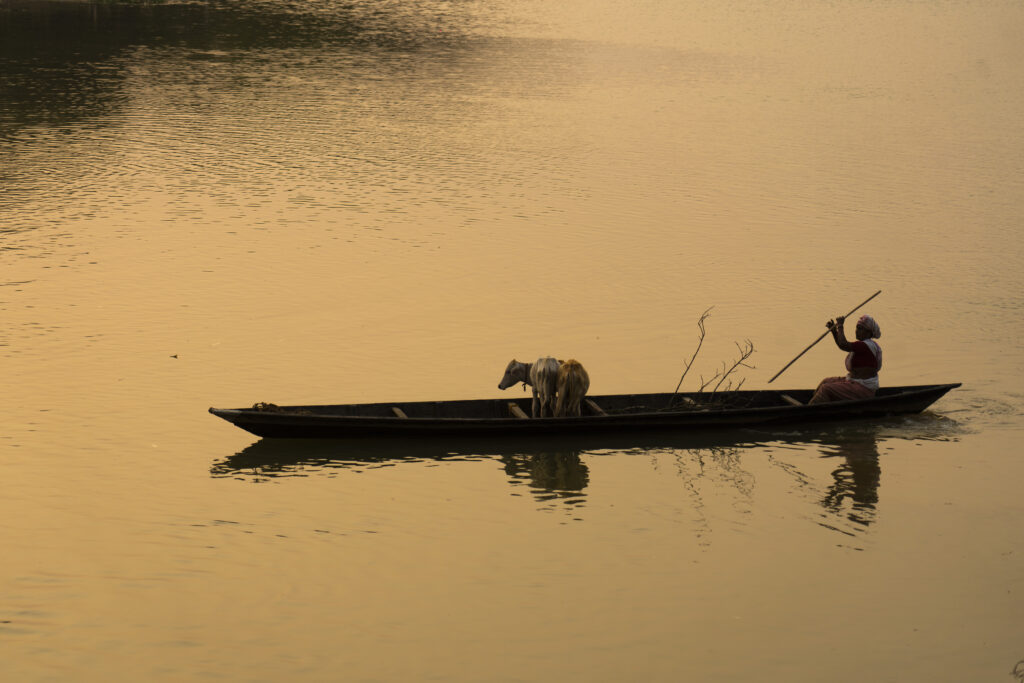
    There are stories of homes being dismantled and reassembled overnight. Of prayer flags moved inland. Of bamboo bridges rebuilt by hand. Of mothers who store seeds in cloth bundles, ready to move with the next storm.

    “Majuli is a boat,” says an old boatman. “We don’t fix it to the shore. We learn to float.”

    Resilience as Routine

    The sattras — Majuli’s Neo-Vaishnavite monastic centers — have seen more than their share of erosion. But even when soil crumbles beneath prayer halls, the chants never stop. The Raas Mahotsav still lights the island in November, even if the stage shifts.

    This is not denial — it’s dignity. A choice to stay rooted, not because it’s easy, but because it’s essential.
    What Travelers Often Miss

    Most visitors arrive for the ferry ride, the monks of Auniati, the mask-makers of Samaguri, or the Raas festival. But they miss the real story: the one unfolding quietly along the riverbanks.

    They miss the lines redrawn with bamboo poles after every flood. The woman planting mustard on land that might be gone in two years. The youth group filling sandbags where roads once were.

    Majuli is not a postcard. It’s a practice in persistence.

    Land in Disappearance, Culture in Continuum

    More than one-third of Majuli has been swallowed by the river in a single century. And yet, the community continues: Boats are carved. Fields are sowed. Festivals are held. Songs are sung.

    Culture, here, isn’t fragile. It’s the anchor.

    In a world that tells people to move for convenience, Majuli stays for belonging. And that continuity — of culture, care, and community — needs to be seen, heard, and supported.

    Where You Step, Matters

    You can’t stop erosion. But your steps can slow the damage.

    As a traveller, you can:

    • Choose homestays that recycle water and avoid fragile shorelines.
    • Say no to plastic — every discarded wrapper hastens loss.
    • Don’t just post, participate — join tree-planting, fishing days, or mask-making.
    • Ask before you act — the land is sacred and layered with meaning.
    • Support local artisans — your purchase may help someone stay instead of migrate.
    • Travel off-season — to spread income beyond festival peaks.

    Even more than help, what Majuli needs is your attention — unfiltered, unhurried, and real.

    The Prayer That Floats

    During Raas Purnima, the island glows with small leaf-boats floating on the river — each carrying a lamp and a prayer. A local schoolteacher said, “We send light not to stop the river, but to remind it — we’re still here.”

    Beyond Hashtags — How You Help

    Majuli doesn’t need pity or saviours. It needs witnesses who act.

    Responsible tourism isn’t about guilt — it’s about gratitude. For being let in. For being trusted. For being given stories to carry home.

    Every time you refill instead of buying plastic, skip a hotel for a home, or share the story behind the smile — you do more than travel. You protect.

    Small choices, made repeatedly, create change that doesn’t shout — but stays.

    Know Before You Go

    • Best time: October to March, but off-season visits are more impactful.
    • Stay: Eco-conscious homestays in Garamur, Samaguri, or Auniati.
    • Ask locals: Let them show you erosion sites, not just tourist spots.
    • Be gentle: Avoid drones, plastics, and disrespectful questions.
    • Listen more: This is a place where silence often says more.
    Majuli may disappear on maps someday.
    But its soul — shaped by storms, prayers, and quiet choices — must not.

    When the earth cracks, they stay.
    Not to make a statement — but to make a home, again and again.

    The question is: when we travel, will we choose to care? Because care is where change begins.

    You don’t need to be many to make a difference. You just need to not look away.”
  • The River That Waited

    The River That Waited

    In the highlands of West Jaintia Hills, Jowai sits quietly above the Myntdu River — a town where legends don’t fade with time; they age like old folk songs, sung in the hush of pine forests and beside flickering hearths. Here, stories are not distractions from life — they are the very bones of it.

    And among these, one story rises with the morning mist — the tale of the Myntdu River, a guardian spirit believed to be watching over the valley.

    “She waited for a wedding that never happened, and so, she keeps flowing, waiting for closure.”

    -an old storyteller whispers.

    The River’s Vow

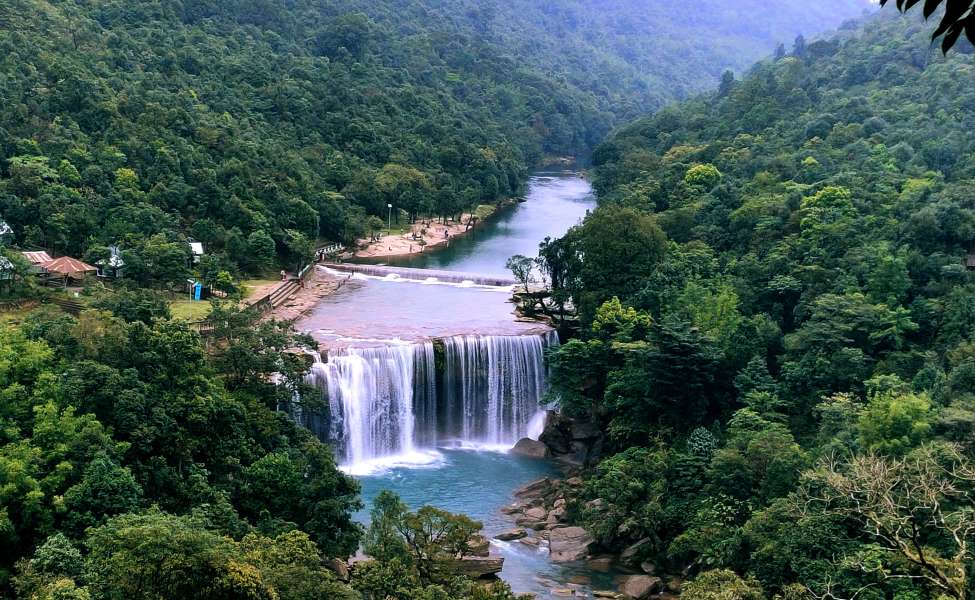
    Locals say that Myntdu is not just a river; she is a sentient spirit. She watches everyone who enters the valley, flowing around Jowai like an ancient sentinel. According to legend, if anyone pollutes her waters or harms the forests along her course, the river will rise — not in anger, but in sorrow.

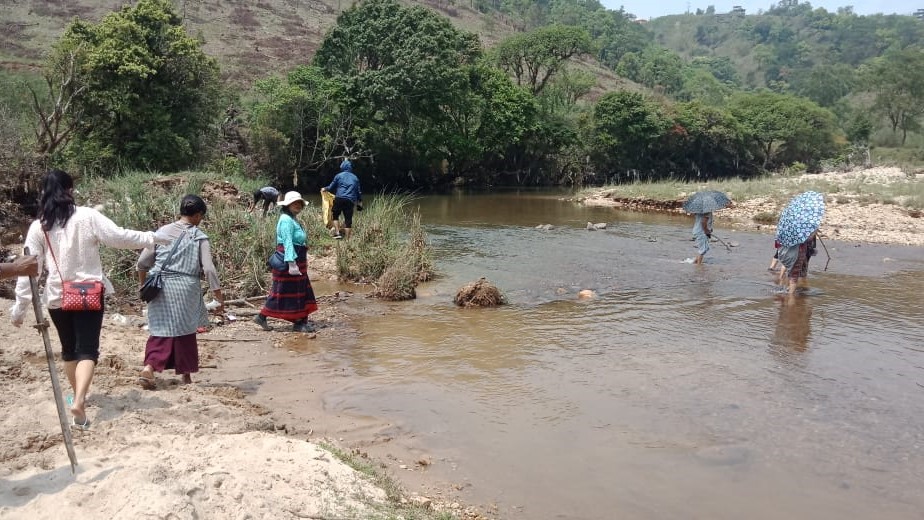
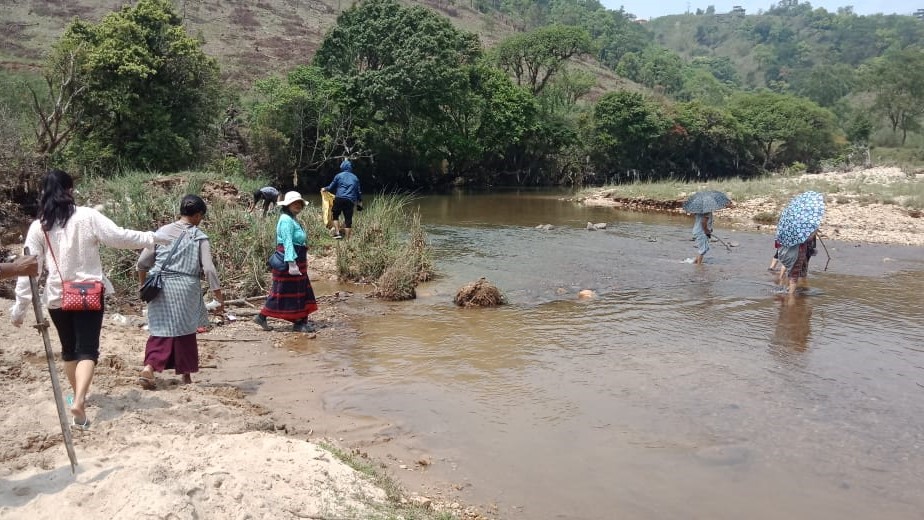
    Routine cleaning of The Myntdu River by the locals

    This myth is not just bedtime poetry — it has shaped how the Jaintia people interact with nature. Fishing is done seasonally, festivals often start with offerings to the river, and even children are taught to greet the river before splashing into her arms.

    Sacred Stones and Whispering Pines

    Beyond the river, Jowai is scattered with sites that hold mythological importance:

    • Nartiang Monoliths:
      A short drive from Jowai brings you to this field of giant stone menhirs and dolmens — said to be raised by ancient warriors and kings. Some locals believe they were once living guardians, turned to stone to protect the land for eternity.
    • Thlumuwi Stone Bridge and Falls:
      Built by Jaintia kings, this bridge is not just architectural pride but part of royal folklore. It is said that a royal couple once exchanged vows here, with the river promising to bear witness forever.
    • Syntu Ksiar – The Flower of Gold:
      A riverbank area in Jowai that commemorates Kiang Nangbah, a local freedom fighter. Legend says he carried the spirit of the Myntdu river in him — strong, silent, and defiant.

    Snippets from the Valley

    • Pine Needle Smoke:
      Villagers use dried pine needles as fire starters. The smell clings to woolen shawls and stories alike.
    • Midnight Drummers:
      During some harvest celebrations, you may hear drums deep in the forest — not played for an audience, but for ancestors.
    • Water That Whispers:
      It’s said that if you sit quietly by the river at dusk, you’ll hear her hum — a melody only those who listen without speaking can hear.

    Know Before You Go

    • Best time: November to February for clear skies and local festivals.
    • Stay: Guesthouses near Ialong Eco Park or local homestays around Thadlaskein Lake.
    • Local tip: Always ask before photographing elders or sacred spaces. Respect isn’t requested here — it’s expected.

    Jowai doesn’t just preserve its legends — it lives them. Whether it’s a whisper in the woods or the shiver of a river at dawn, the town reminds us that myths aren’t dead — they simply wait for someone who listens like they mean it.

    Some places echo with noise; others hum with memory. Jowai hums.”

  • Stories Flow Beneath the Surface

    Stories Flow Beneath the Surface

    Jowai, the heart of the Pnar people in Meghalaya’s West Jaintia Hills, is known for its tranquil charm — but beneath the stillness, there are stories layered like the riverbed of Myntdu. The locals say the river listens. It hears everything: prayers whispered into the wind, songs sung from betel-stained lips, the language of forests carried by bamboo flutes.

    This isn’t a place that explains itself. It invites you to stay long enough until the patterns reveal themselves.

    Ancestral Altars and Everyday Life

    Jowai isn’t frozen in the past — but its traditions breathe through daily life. In small courtyards, families light fires near monoliths for private rituals. Grandmothers recount legends of U Sajar Nangli while weaving cane baskets. There’s no ceremony to it. Culture is not performance here — it’s presence.

    Local Voices, Local Ways

    • The Weaver’s Wisdom:
      In Raliang village, a weaver says, “Our threads don’t follow fashion. They follow stories. Every motif has a meaning — it speaks of rain, harvest, or loss.”
    • Betel Nut Trails:
      All across Jowai, betel nut trees line paths and fields. They’re not just crops — they’re companions in rituals, offerings, and conversation.
    • The Rhythm of Rites:
      Traditional drumbeats at Niamtre ceremonies don’t seek an audience. They seek the ancestors. Outsiders are welcome, but not entertained — a distinction that makes all the difference.

    Interesting Insight: Myntdu is Sacred

    The Water Keeps the Memory”

    The Myntdu River is considered sacred by the Jaintia people. It is not just a water source — it is spoken to before rituals, crossed with care, and never disrespected. Some villages forbid washing clothes in it. The respect is not mandated — it’s inherited.

    A cleaning drive on the Mytundu River by the locals

    Know Before You Go: Travel Tips for Jowai

    • Getting there: About 65 km from Shillong by road. The drive winds through pine forests and waterfalls.
    • When to visit: Winter (Nov–Feb) for dry days, or monsoon (Jun–Sep) for misty magic and festivals.
    • Must-see: Tyrshi Falls, Thadlaskein Lake, Jowai market (especially on market day), Nartiang Monoliths.
    • Where to stay: Simple homestays around Jowai or nearby resorts toward Thadlaskein offer peaceful options.

    Jowai doesn’t unfold like a destination. It deepens like a conversation. One you may not fully understand, but one you’ll feel echoing long after the drive back.

    Not every journey shows you the world — some teach you how to listen to it.”

  • The Quiet Lake Beneath the Hills

    The Quiet Lake Beneath the Hills

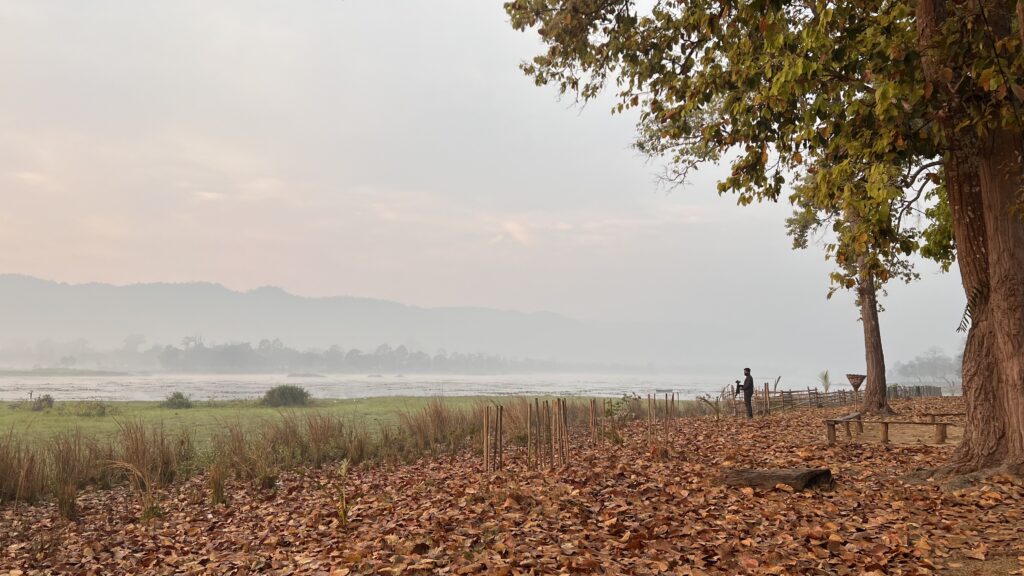
    Tucked at the foothills of Assam’s Garo hills, Chandubi Lake doesn’t announce itself with drama. It greets you with stillness. Bamboo groves sway, birds return without a fuss, and the lake reflects whatever the sky decides to be.

    There are no brochures waiting at the entrance. But if you listen closely — to the paddles, to the forest hush, to the fire crackling outside a villager’s home — Chandubi speaks.

    Waters That Remember

    Locals say the lake was born after the great earthquake of 1897 — when the earth cracked, and the forest filled with water. Since then, time here has been shaped by nature’s memory.

    Fishermen paddle silently, navigating the shallows with bamboo poles. Their boats are hand-carved, passed down through families. “You don’t force your way through this lake,” says Dijen, who’s been fishing here for 30 years. “You move with it.”

    A Place That Doesn’t Hurry”

    Footsteps in the Forest

    A short walk through nearby tribal villages reveals everyday life — drying herbs tied to windows, handwoven baskets, children returning from school across leaf-strewn paths. No curated experiences. No lens flare.

    In the dense patches of forest that surround the lake, birdcalls become markers of time. Hornbills, drongos, and orioles all have their space. Nature doesn’t pose here — it carries on.

    Snippets from the Shore

    • The Evening Circle:
      • At sundown, villagers often sit in quiet groups by the water — not to discuss business, but to share warmth. Sometimes in words, sometimes in silence.
    • The Bamboo Rudder:
      • A fisherman guides his dugout canoe with one pole and a quiet hum. “The lake doesn’t rush,” he smiles. “So I don’t either.”
    • The Tea Stall Conversation:
      • A woman named Bina pours red tea and recounts how they celebrate Bihu by the lake, not with fireworks, but with community plays and shared cooking.

    The Garo Influence

    Though in Assam, the lake is closely linked with the Garo community. The border culture here means songs sung in Garo blend with Assamese rhythms. Traditional dances happen not on stage, but in open courtyards during local events. And food — smoked fish, wild greens, and fermented bamboo shoots — speaks of this mingling.

    Know Before You Go: Travel Tips for Chandubi

    • Getting there: Around 60 km from Guwahati. Accessible by road — best during daylight hours.
    • When to visit: October to March offers dry skies and the clearest reflections.
    • What to carry: Binoculars, light woolens, respect for nature — and time.
    • Stay options: Rustic eco-campsites and a few village stays offer meals, stories, and slow mornings.

    Chandubi won’t ask for your attention — it simply welcomes your presence. There’s no itinerary to chase here, only moments to notice: a leaf falling, a ripple growing, a stranger smiling.

    Some places you capture in photos. Chandubi is one you carry quietly, like a calm that lingers.”

  • Listening to the Edges in Menchuka

    Listening to the Edges in Menchuka

    Far in the folds of Arunachal Pradesh, where the land becomes hush before turning into Tibet, sits Menchuka — a small town that doesn’t rise like a destination but settles like a revelation. Surrounded by pine-clad hills, slivers of blue rivers, and quiet military roads, Menchuka balances solitude and surprise like few places can.

    The name ‘Menchuka’ loosely translates to “medicinal water of snow” — and the place lives up to it. Clean, high-altitude air. Springs that trickle with silence. Paths that lead not to landmarks but to feelings — of distance, resilience, and welcome.

    Alo People and Their Everyday Grace

    Menchuka is home to the Memba tribe, and nearby, to the Adi and Tagin communities. Here, hospitality isn’t a gesture — it’s woven into the daily rhythm. You’ll be invited in not with grand gestures, but with butter tea, laughter, and warmth that fills more than your hands.

    Traditional houses made from wood, stone, and bamboo overlook fields of barley and maize. Monasteries dot the hills, and in their prayer flags, the breeze carries centuries of quiet faith. Local kids play barefoot with sticks as cricket bats. Dogs bark at the wind, not at strangers. There’s no urgency to perform — and that’s what makes it beautiful.

    A Village Framed by Borders, Held Together by Belonging”

    Between Army Camps and Apple Orchards

    Menchuka stands close to the Indo-Tibet border — and the presence of the military is unavoidable. Yet, it doesn’t overshadow life; it blends in. Soldiers wave at locals, help repair bridges, buy from village stores. It’s one of the few places where camouflage uniforms and monk robes share the same footpaths.

    Meanwhile, in September and October, apple trees heavy with fruit bend near monasteries. In winter, the same roads are blanketed in snow — and the silence becomes deeper, almost sacred.

    Three Unusual Observations from Menchuka

    • Handwoven Textiles with Personal Codes:
      Traditional dresses often contain symbols woven by the weaver to reflect their personal story or beliefs — not visible to all, but meaningful to those who know where to look.
    • Oral Mapping Instead of Signboards:
      Locals don’t give directions with “left” or “right” — they tell you to turn “after the house with three prayer wheels,” or “beyond the sleeping dog corner.” It teaches you to observe, not just follow.
    • Monasteries That Smell of Juniper and Books:
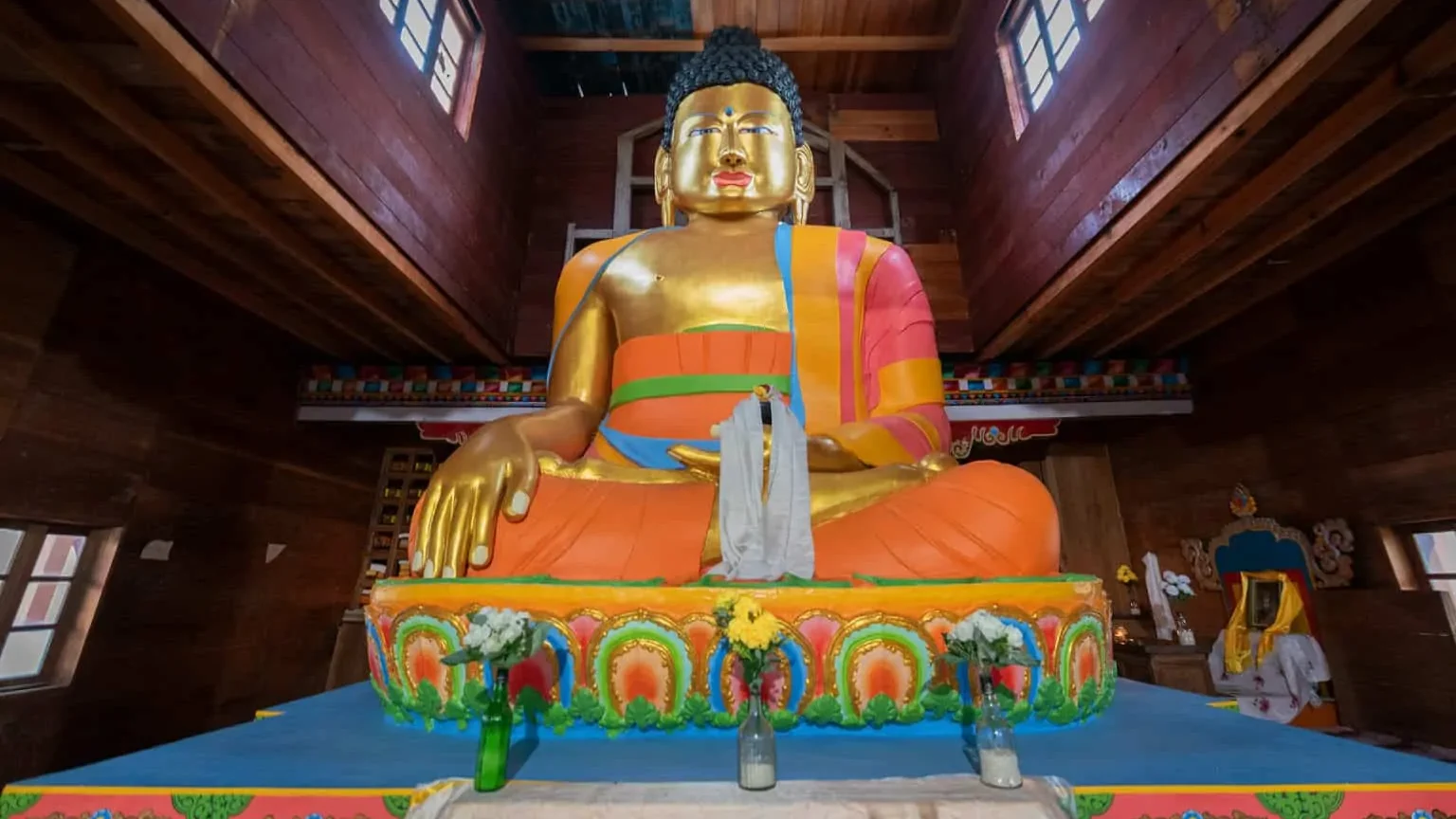
      The Samten Yongcha monastery, older than any map you’ll carry, welcomes you not with grandeur but with incense, dusty prayer books, and chants that don’t demand understanding — only attention.

    When in Menchuka, Remember…

    • Best time to visit: March to May for greenery and October for golden harvests.
    • How to reach: By road via Aalo (a long journey best done in stages), or by helicopter from Itanagar (weather permitting).
    • Where to stay: Local homestays are often run by teachers, farmers, or retired army men. You’ll leave with stories, not just receipts.
    • Don’t miss: The 400-year-old Samten Yongcha Gompa perched on a cliff, and an early morning walk by the Siyom River when the fog hasn’t fully left.

    Menchuka doesn’t try to impress you. It offers space — to reflect, to connect, to walk slow, and to feel small in a good way. The quiet here is not an absence, but a depth — where stories aren’t told loudly, but land gently in your memory.

    In places where the road ends, something else begins — in Menchuka, it’s the sound of stillness you’ll remember.”