Category: Food & Flavours

  • Where the Smoke Adds Flavour

    Where the Smoke Adds Flavour

    Longwa isn’t just famous for straddling two countries — it also straddles two culinary worlds: one of ancestral hunting and one of seasonal cultivation. Here, the kitchen is a place of memory and muscle. The firewood burns slow, the meats cook slower, and nothing is ever rushed, not even hunger.

    In Longwa, every meal is a conversation between the land, the forest, and the hands that prepare it.

    Inside a Konyak Kitchen

    You’ll smell it before you see it — the rich aroma of smoked meat wafting through wooden beams blackened by decades of fire. Most kitchens are elevated over ground, with platforms used for drying, curing, and preserving. There are no spices from the plains here — only salt, chilli, smoke, and intuition.

    Smoked pork is a staple, often stored for months above the hearth. Alongside are fermented soybeans (akin to akhuni), wild herbs, and rice from the jhum fields. The food may seem minimal, but it’s deeply layered — like the people.

    Must-Experience Local Flavours

    • Smoked Pork with Dry Bamboo Shoot: Sharp, bold, and comforting — this is soul food.
    • Sticky Red Rice: Grown locally, best enjoyed with hot chutney and meat.
    • Fermented Soybean Paste (Ngari-style): Served sparingly, but leaves an impression.
    • Snail Curry and Foraged Greens: A seasonal delicacy shared among family.
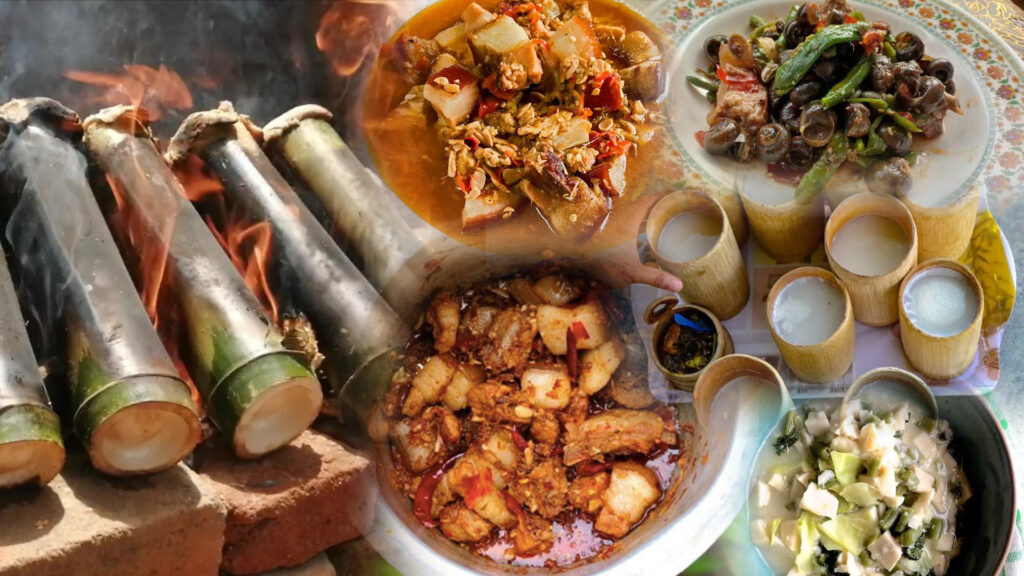
    A Meal With a View — and a Lesson

    At the village edge, overlooking Myanmar, you’ll often find a wood-and-thatch home where you’re offered a meal with minimal conversation. One host said, “You don’t speak while eating — you respect what it took to hunt, grow, and prepare.”

    Chilli That Brings Tears and Tales

    Every family has their secret chilli chutney — often involving ghost pepper (bhut jolokia), smoked tomatoes, and a lot of pride. When you ask for the recipe, they smile. “We don’t measure. The fire tells us.”

    Know Before You Go

    • Food may be non-vegetarian heavy: Ask respectfully if you have dietary preferences.
    • Eat what’s offered: Refusing food is seen as declining a relationship.
    • Don’t look for ‘organic’ labels: Everything here already is.

    In Longwa, food isn’t cooked — it’s crafted. Each dish is a product of time, terrain, and trust. To eat here is to be let in — not just into a home, but into a way of life.

    In Longwa, the fire cooks more than food — it shapes belonging.”

  • Flavours of the Forest at Chandubi

    Flavours of the Forest at Chandubi

    Chandubi is not where you go for restaurant reviews — it’s where the food finds you. In the rhythms of forest walks, in the slow smoke curling from a bamboo hut, and in the stories of grandmothers who never wrote a recipe but remember every taste. The food here doesn’t just nourish; it roots you.

    Most kitchens in the villages around Chandubi spill into courtyards. Cooking happens over firewood, beside banana leaves, with dogs dozing nearby and children peeling betel nuts. The menu? Wild greens foraged that morning, fresh fish from Chandubi lake, mustard-flavored everything, and rice — always rice.

    The Khasis, Garos, Rabhas, and Assamese people living around the area share overlapping culinary languages, yet each has its accents. From bamboo shoot-infused pork to the delicate sourness of the tenga (sour curry), the plate is a quiet rebellion against packaged taste.

    Specialties You Should Try

    • Bamboo Shoot with Fish/Pork:
      • Fermented bamboo shoot adds sharpness to a dish that simmers slowly.
    • Khar:
      • A traditional alkaline dish made with raw papaya, pulses, and banana stem ash — a signature Assamese touch.
    • Poita Bhat:
      • Fermented rice eaten cold, with mustard oil, onion, and chillies — a meal for the body, and memory.
    • Tenga Curry with Lake Fish:
      • Light and tangy, this is a bowl of Chandubi’s water, soul, and sunshine.

    A Morning at the Weekly Market

    The Chandubi weekly haat is a crash course in seasonal abundance. Wild mushrooms, red ants, silk cocoons, and sticky rice cakes share space with stories and gossip. This isn’t a place to bargain — it’s a place to learn. One elder said, “Food that grows here knows what we need before we do.”

    A Tea Break with Something More

    Near the lake, an elderly woman serves black tea in reused glass tumblers. She offers puffed rice and jaggery. “This is not snack,” she smiles. “This is memory.”

    Know Before You Go

    • Ask before clicking: Respect the kitchen space; many households are private and sacred.
    • Don’t expect menus: The best meals are what’s already cooking.
    • Carry reusable containers: You might get offered leftovers — that’s love in a bowl.

    Chandubi teaches us that food isn’t always plated; sometimes, it’s shared over laughter and silence. It’s smoke, spice, and generosity — passed not down but around.

    In some places, you eat to fill. In Chandubi, you eat to feel.”

  • The Quiet Lake Beneath the Hills

    The Quiet Lake Beneath the Hills

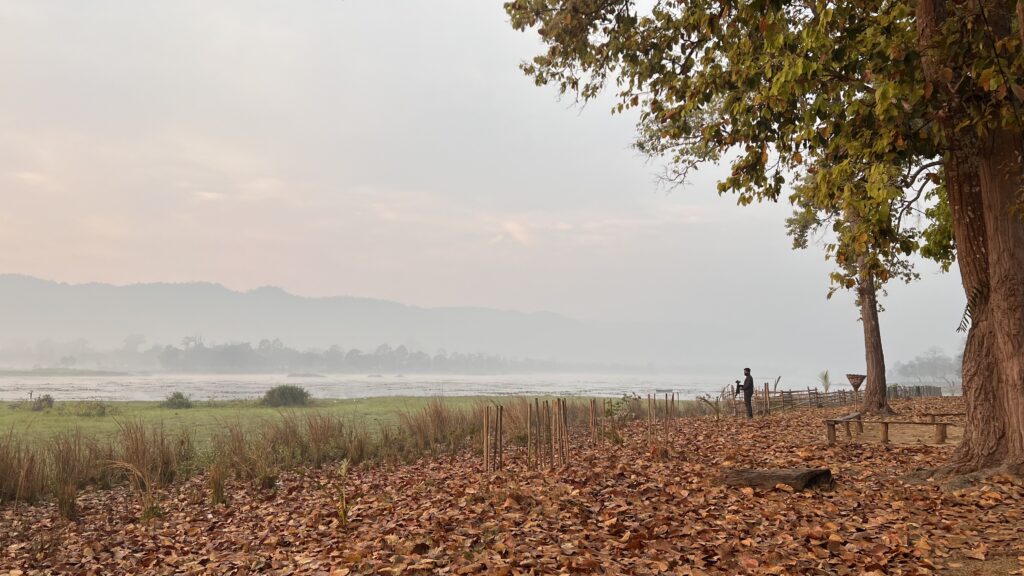
    Tucked at the foothills of Assam’s Garo hills, Chandubi Lake doesn’t announce itself with drama. It greets you with stillness. Bamboo groves sway, birds return without a fuss, and the lake reflects whatever the sky decides to be.

    There are no brochures waiting at the entrance. But if you listen closely — to the paddles, to the forest hush, to the fire crackling outside a villager’s home — Chandubi speaks.

    Waters That Remember

    Locals say the lake was born after the great earthquake of 1897 — when the earth cracked, and the forest filled with water. Since then, time here has been shaped by nature’s memory.

    Fishermen paddle silently, navigating the shallows with bamboo poles. Their boats are hand-carved, passed down through families. “You don’t force your way through this lake,” says Dijen, who’s been fishing here for 30 years. “You move with it.”

    A Place That Doesn’t Hurry”

    Footsteps in the Forest

    A short walk through nearby tribal villages reveals everyday life — drying herbs tied to windows, handwoven baskets, children returning from school across leaf-strewn paths. No curated experiences. No lens flare.

    In the dense patches of forest that surround the lake, birdcalls become markers of time. Hornbills, drongos, and orioles all have their space. Nature doesn’t pose here — it carries on.

    Snippets from the Shore

    • The Evening Circle:
      • At sundown, villagers often sit in quiet groups by the water — not to discuss business, but to share warmth. Sometimes in words, sometimes in silence.
    • The Bamboo Rudder:
      • A fisherman guides his dugout canoe with one pole and a quiet hum. “The lake doesn’t rush,” he smiles. “So I don’t either.”
    • The Tea Stall Conversation:
      • A woman named Bina pours red tea and recounts how they celebrate Bihu by the lake, not with fireworks, but with community plays and shared cooking.

    The Garo Influence

    Though in Assam, the lake is closely linked with the Garo community. The border culture here means songs sung in Garo blend with Assamese rhythms. Traditional dances happen not on stage, but in open courtyards during local events. And food — smoked fish, wild greens, and fermented bamboo shoots — speaks of this mingling.

    Know Before You Go: Travel Tips for Chandubi

    • Getting there: Around 60 km from Guwahati. Accessible by road — best during daylight hours.
    • When to visit: October to March offers dry skies and the clearest reflections.
    • What to carry: Binoculars, light woolens, respect for nature — and time.
    • Stay options: Rustic eco-campsites and a few village stays offer meals, stories, and slow mornings.

    Chandubi won’t ask for your attention — it simply welcomes your presence. There’s no itinerary to chase here, only moments to notice: a leaf falling, a ripple growing, a stranger smiling.

    Some places you capture in photos. Chandubi is one you carry quietly, like a calm that lingers.”

  • Culture, Farming, and Apatani Tribe of Ziro

    Culture, Farming, and Apatani Tribe of Ziro

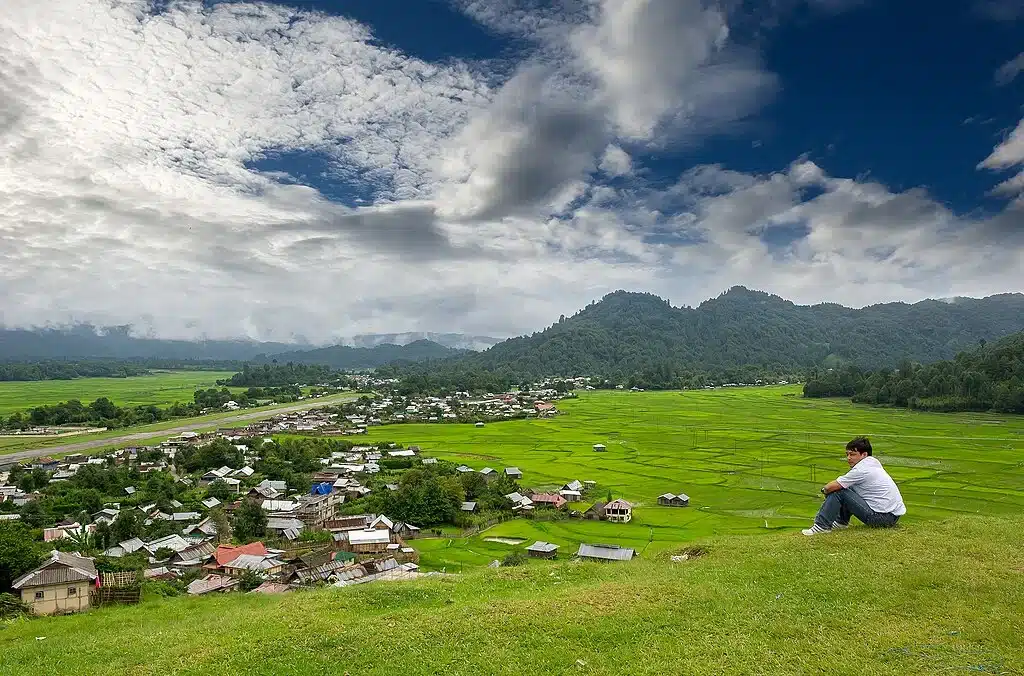
    Tucked amidst pine ridges and misty fields, Ziro in Arunachal Pradesh is not just scenic — it’s deeply lived in. The valley isn’t curated for visitors; it’s cultivated for its people. The Apatani community, who have been shaping this land for generations, follow a way of life rooted in sustainability, subtlety, and strength.

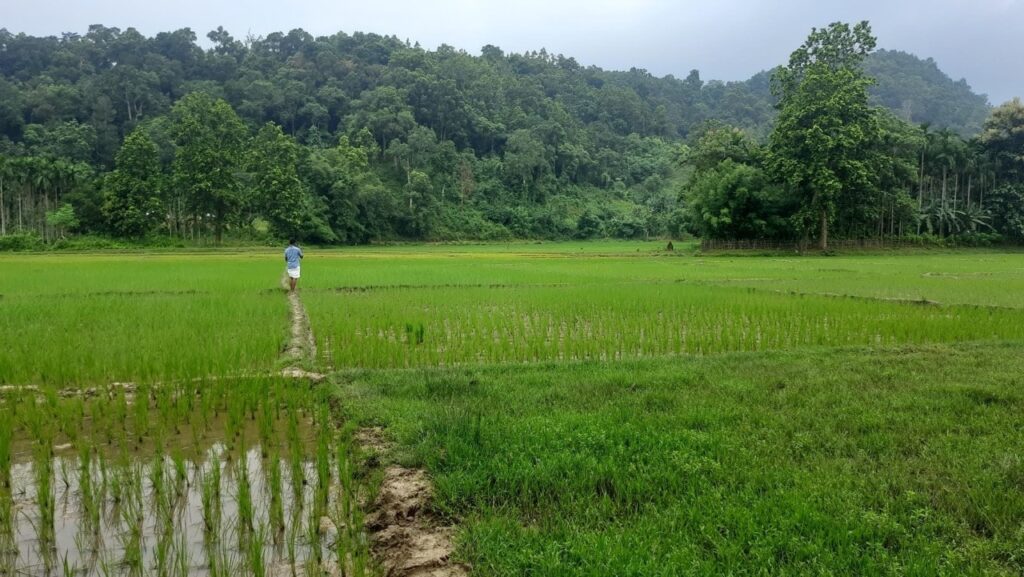
    Here, farming isn’t just labor — it’s knowledge. Walk past a Ziro paddy field and you’ll see fish swimming between rice stems — an ingenious paddy-cum-fish cultivation system that maintains soil fertility and food security without synthetic inputs. Not a technique invented in labs — but a practice born of patience and observation.

    A Landscape that Grows with Its People”

    The Apatani Way: Tied to Earth, Time and Memory

    Every home in Ziro feels like it belongs to the land. Made of pinewood and set on stilts, Apatani houses are often built by the family itself. Look closer at the woodwork, and you’ll find motifs — suns, birds, hornbills, spirals — symbols passed down generations. These aren’t decorative; they’re communicative, echoing stories of nature, protection, and identity.

    The older generation of women, with facial tattoos and cane nose plugs, carry a history both personal and political — a symbol of resilience from a time when cultural identity meant survival. Today, fewer youth continue this tradition, but the pride remains intact, alive in their festivals, songs, and daily rituals.

    Ziro’s Natural Quiet Isn’t Empty — It’s Full

    There’s something rare about Ziro’s silence. Not the absence of sound, but the absence of noise. You’ll hear footsteps on dry leaves, the whoosh of a bamboo swing, the echo of wood being chopped, the low hum of conversations between neighbours.

    Birdsong is a big part of this landscape. Ziro is part of the Important Bird Area network — a haven for birds like the rare Blyth’s Tragopan. But bird-watching here doesn’t feel like a tour — it feels like being let in on a quiet secret.

    Community First: Shared Work, Shared Joy

    In Ziro, most activities — from repairing roofs to planting fields — are collective. It’s not just about efficiency; it’s about spirit. During Murung, the major festival, villagers gather to bless harvests and honour ancestors. The celebrations are marked by ceremonial mithun sacrifices, songs that recount lineage, and feasts where every visitor is welcome — not just as a guest, but as someone to share with.

    Evenings here aren’t for nightlife. They’re for long walks, over meals cooked in bamboo tubes, and for watching fireflies settle into the forests.

    Travel Tip: Be Curious, Not Just Present

    • Getting there: Ziro is accessible by road via Naharlagun (nearest railhead) or Lilabari (nearest airport). Expect long, winding roads — and incredible views.
    • Best time to visit: March to May (for spring beauty), or September for the Ziro Music Festival.
    • Stay options: Opt for homestays that offer cultural immersion over luxury. Hosts are usually happy to share stories, food, and time — if you ask with interest.
    • What to bring: Walking shoes, rain protection, and an open mind.

    Ziro isn’t about what’s missing from urban life. It’s about what’s quietly endured — harmony with nature, respect for rhythm, and dignity in tradition. Spend a few days here and you don’t feel detached from the world — you feel reattached to something you may have forgotten.

    Somewhere between the hills and hands that tend them, Ziro reminds you how to be human again.”

  • Where Prayer and Pines Meet

    Where Prayer and Pines Meet

    A Hamlet in No Hurry”

    Tucked deep within West Kameng district of Arunachal Pradesh, Shergaon is not a detour — it is the road less taken. As you drive through pine-lined curves and prayer flags fluttering like whispers, the world you left behind begins to mute itself.

    The Monpa village of Shergaon lives at its own pace. Morning smoke curls from wooden chimneys. Monks walk barefoot to the temple. The rhythm here isn’t slow — it’s steady.

    More Than a Monastery

    Most travellers arrive looking for the Shergaon Gompa — a Buddhist monastery tucked against pine-covered slopes. But what stays with you isn’t just the stupa or the prayer wheels. It’s the warmth of the head monk who speaks in metaphors. The child who offers you a cherry from his pocket. The woman who lights a butter lamp — not for blessings, but for balance.

    You’ll see villagers praying, yes. But more often, they’re planting, cooking, fixing — living their beliefs through acts, not announcements.

    Fields of Red and Wisdom

    Shergaon’s fields glow red in autumn, not from flowers, but from red amaranth, grown beside buckwheat and maize. The Monpas practice traditional permaculture — rotating crops, resting soil, and using herbs not just for taste, but for temperament.

    “We grow what grows with us,” says a farmer and part-time teacher.

    Farming isn’t a job here — it’s participation. Even elders take their walking sticks to the orchard.

    Snippets from Shergaon

    • The Herbalist’s Basket:
      Tsering Dolma collects 8 herbs every full moon — a mix of roots, flowers, and stems. “One for strength, one for peace,” she smiles. No written chart. Only memory.
    • The Wind Chimes Are Real:
      Not decorative ones — but actual bells tied to prayer flags and fruit trees. When the wind blows, it carries more than sound — it carries a wish.
    • Pine Fire and Pickles:
      In every kitchen: pinewood fire, yak milk tea, and fermented bamboo shoot pickle. The taste is sharp, but the memory lasts longer than the burn.

    Know Before You Go

    • Getting There: Best accessed via Bomdila or Dirang; shared vehicles from Guwahati and Tezpur (Assam) operate during daylight hours.
    • Stay Options: Homestays with Monpa families offer both wooden floors and floor-sitting warmth.
    • Ideal Season: October to March — for clear skies and cultural ceremonies.
    • Responsible Travel Tip: Don’t pick herbs or wildflowers unless guided by a local. Nature isn’t display — it’s livelihood.

    Some places don’t change you. They remind you of what you never lost.”