In the highlands of West Jaintia Hills, Jowai sits quietly above the Myntdu River — a town where legends don’t fade with time; they age like old folk songs, sung in the hush of pine forests and beside flickering hearths. Here, stories are not distractions from life — they are the very bones of it.
And among these, one story rises with the morning mist — the tale of the Myntdu River, a guardian spirit believed to be watching over the valley.
“She waited for a wedding that never happened, and so, she keeps flowing, waiting for closure.”
-an old storyteller whispers.
The River’s Vow
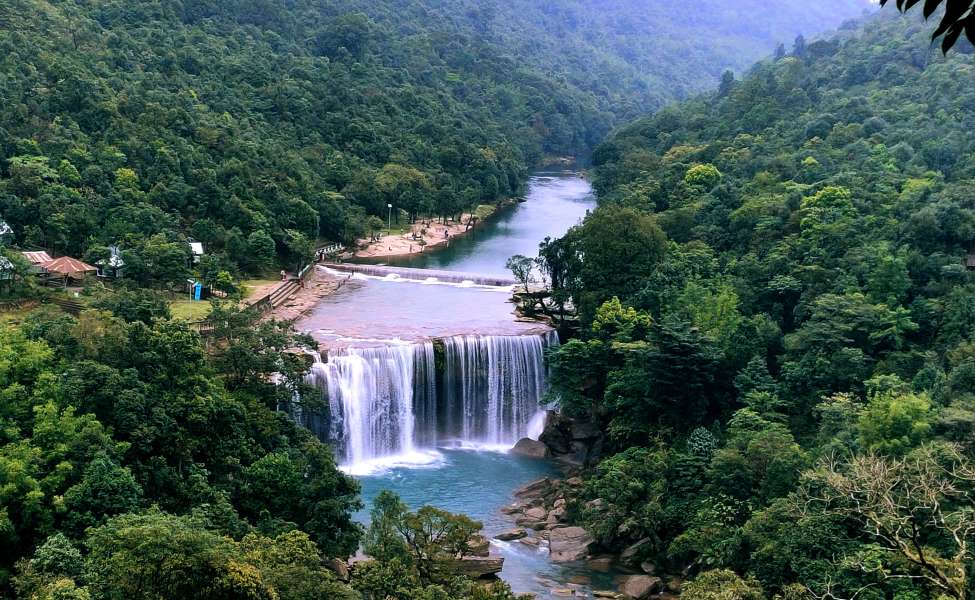
Locals say that Myntdu is not just a river; she is a sentient spirit. She watches everyone who enters the valley, flowing around Jowai like an ancient sentinel. According to legend, if anyone pollutes her waters or harms the forests along her course, the river will rise — not in anger, but in sorrow.
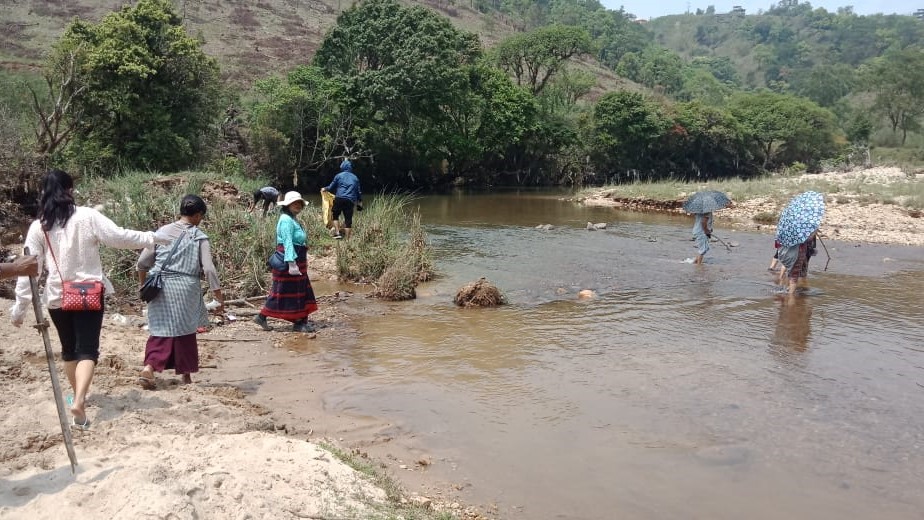
This myth is not just bedtime poetry — it has shaped how the Jaintia people interact with nature. Fishing is done seasonally, festivals often start with offerings to the river, and even children are taught to greet the river before splashing into her arms.
Sacred Stones and Whispering Pines
Beyond the river, Jowai is scattered with sites that hold mythological importance:
- Nartiang Monoliths:
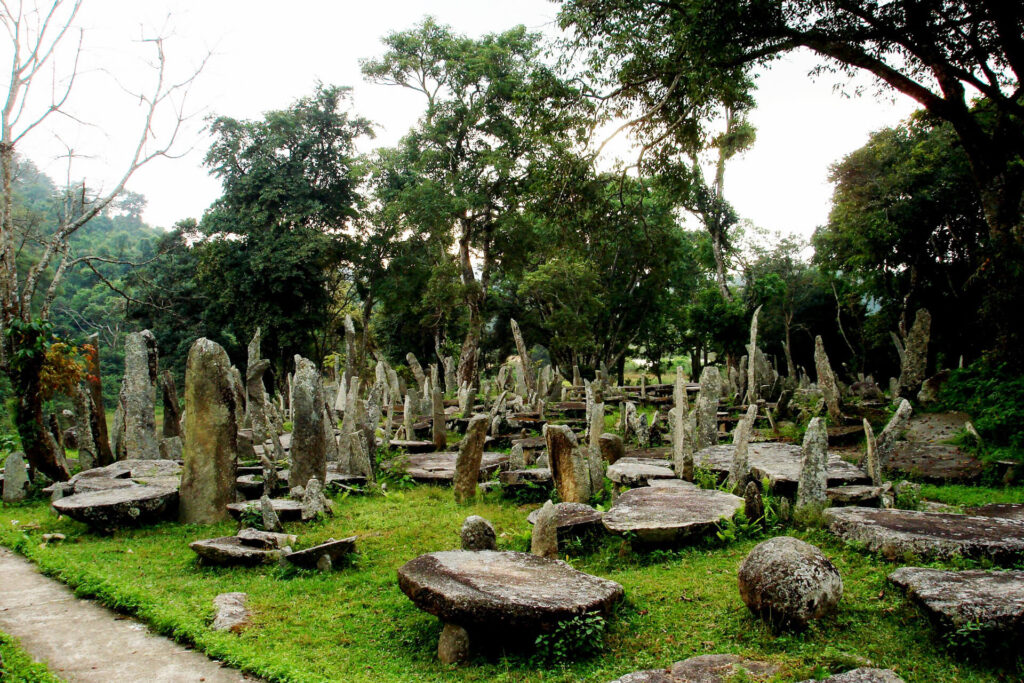
A short drive from Jowai brings you to this field of giant stone menhirs and dolmens — said to be raised by ancient warriors and kings. Some locals believe they were once living guardians, turned to stone to protect the land for eternity. - Thlumuwi Stone Bridge and Falls:
Built by Jaintia kings, this bridge is not just architectural pride but part of royal folklore. It is said that a royal couple once exchanged vows here, with the river promising to bear witness forever. - Syntu Ksiar – The Flower of Gold:
A riverbank area in Jowai that commemorates Kiang Nangbah, a local freedom fighter. Legend says he carried the spirit of the Myntdu river in him — strong, silent, and defiant.
Snippets from the Valley
- Pine Needle Smoke:
Villagers use dried pine needles as fire starters. The smell clings to woolen shawls and stories alike. - Midnight Drummers:
During some harvest celebrations, you may hear drums deep in the forest — not played for an audience, but for ancestors. - Water That Whispers:
It’s said that if you sit quietly by the river at dusk, you’ll hear her hum — a melody only those who listen without speaking can hear.
Know Before You Go
- Best time: November to February for clear skies and local festivals.
- Stay: Guesthouses near Ialong Eco Park or local homestays around Thadlaskein Lake.
- Local tip: Always ask before photographing elders or sacred spaces. Respect isn’t requested here — it’s expected.
Jowai doesn’t just preserve its legends — it lives them. Whether it’s a whisper in the woods or the shiver of a river at dawn, the town reminds us that myths aren’t dead — they simply wait for someone who listens like they mean it.
Some places echo with noise; others hum with memory. Jowai hums.”