Category: Ziro

  • Fields, Forests and the Quiet Pact

    Fields, Forests and the Quiet Pact

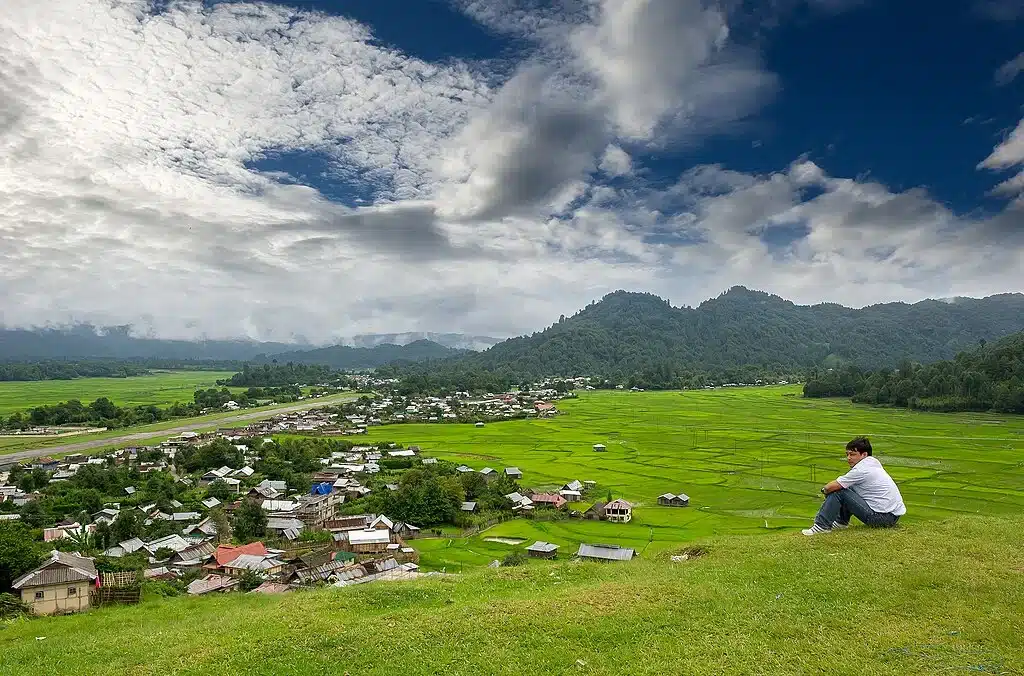
    Ziro isn’t cloaked in wilderness — it wears it like second skin. Nestled in Arunachal Pradesh’s Apatani Plateau, Ziro doesn’t separate the forest from the field, the sacred from the everyday. Here, pine-covered ridges, bamboo groves, and paddy fields don’t just exist — they co-exist, held together by an unspoken pact of respect.

    For the Apatanis, the forest is not just something to conserve — it is something to converse with.

    Agroforestry Before It Was a Trend

    Long before climate scientists coined the term “agroforestry,” the Apatanis were already practicing it — integrating wet rice cultivation with fish farming, bordered by carefully preserved bamboo belts and pine patches.

    No fences divide utility from reverence. Trees are planted not just for timber, but for festivals. Bamboo is harvested with ceremonies. Even leaves have seasons — and stories.

    This interdependence isn’t strategy — it’s memory, ritual, and responsibility.

    “Our field feed us, but it is the forest that watches over us,” says an elderly neighbor of our hosts.

    Talley Valley: Ziro’s Breathing Lung

    Just beyond the cultivated valley lies the Talley Valley Wildlife Sanctuary, a high-altitude haven of orchids, clouded leopards, and Mithun trails. It’s one of the few places where temperate, sub-tropical, and alpine vegetation meet — creating a botanical overlap that is rare even in biodiversity-rich Northeast India.

    This isn’t a safari park. There are no curated trails. You walk through moss-laced silence, across hanging bridges, and under the gaze of hornbills — who might just decide to lead or ignore you.
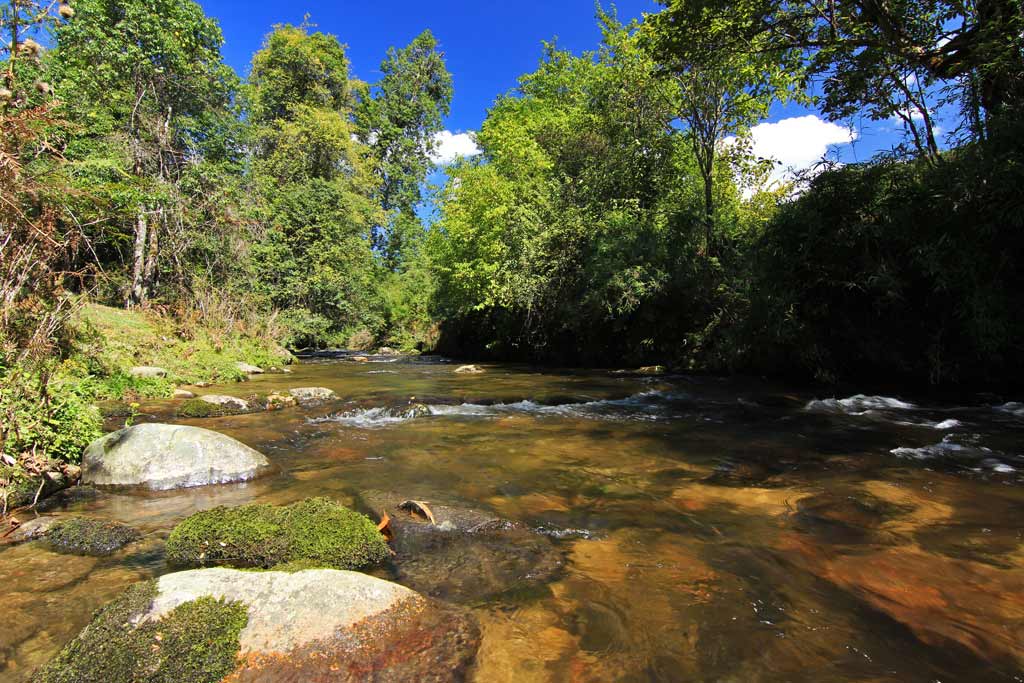
    Talley Valley

    Snippets from the Forest-Valley Life

    • Birds as Timekeepers
      Locals note the arrival of the Himalayan Cuckoo as the sign to start sowing. The Great Hornbill’s flight is believed to bring omens — of birth, marriage, or war.
    • Tree Carvings in Siiro
      In some pockets, trunks are carved with ancestral markings — small lines and patterns representing clans and stories. The trees, in turn, are never cut.
    • Bamboo and Belief
      Certain groves are considered taboo zones — where hunting, cutting, or even loud laughter is forbidden. Children are told these are places “where the spirits rest.”

    House Posts That Speak

    Apatani homes often have central wooden posts carved with symbolic motifs — some depict animals, others ancestors or forest spirits. These aren’t decorative — they are reminders. One elderly man explained, “We plant a tree knowing it will become a pillar. The pillar then remembers us when we’re gone.”

    Know Before You Go

    • Best time: March to May (lush forests) and October (after harvest)
    • Where to stay: Homestays in Hong, Hari or Hija villages; guided treks into Talley Valley can be arranged locally
    • Etiquette tips:
    • Don’t litter near groves — many are sacred
    • Always ask before photographing house carvings
    • Avoid entering forest paths alone — take a local guide

    Ziro doesn’t guard its forests — it grows with them. The trees here are not distant beings to be watched. They are woven into homes, customs, songs, and silences. And if you walk gently enough, they might let you in — not as a visitor, but as someone who knows how to listen.

    In Ziro, the forest isn’t beyond the fence — it begins with your doorway.”

  • Culture, Farming, and Apatani Tribe of Ziro

    Culture, Farming, and Apatani Tribe of Ziro

    Tucked amidst pine ridges and misty fields, Ziro in Arunachal Pradesh is not just scenic — it’s deeply lived in. The valley isn’t curated for visitors; it’s cultivated for its people. The Apatani community, who have been shaping this land for generations, follow a way of life rooted in sustainability, subtlety, and strength.

    Here, farming isn’t just labor — it’s knowledge. Walk past a Ziro paddy field and you’ll see fish swimming between rice stems — an ingenious paddy-cum-fish cultivation system that maintains soil fertility and food security without synthetic inputs. Not a technique invented in labs — but a practice born of patience and observation.

    A Landscape that Grows with Its People”

    The Apatani Way: Tied to Earth, Time and Memory

    Every home in Ziro feels like it belongs to the land. Made of pinewood and set on stilts, Apatani houses are often built by the family itself. Look closer at the woodwork, and you’ll find motifs — suns, birds, hornbills, spirals — symbols passed down generations. These aren’t decorative; they’re communicative, echoing stories of nature, protection, and identity.

    The older generation of women, with facial tattoos and cane nose plugs, carry a history both personal and political — a symbol of resilience from a time when cultural identity meant survival. Today, fewer youth continue this tradition, but the pride remains intact, alive in their festivals, songs, and daily rituals.

    Ziro’s Natural Quiet Isn’t Empty — It’s Full

    There’s something rare about Ziro’s silence. Not the absence of sound, but the absence of noise. You’ll hear footsteps on dry leaves, the whoosh of a bamboo swing, the echo of wood being chopped, the low hum of conversations between neighbours.

    Birdsong is a big part of this landscape. Ziro is part of the Important Bird Area network — a haven for birds like the rare Blyth’s Tragopan. But bird-watching here doesn’t feel like a tour — it feels like being let in on a quiet secret.

    Community First: Shared Work, Shared Joy

    In Ziro, most activities — from repairing roofs to planting fields — are collective. It’s not just about efficiency; it’s about spirit. During Murung, the major festival, villagers gather to bless harvests and honour ancestors. The celebrations are marked by ceremonial mithun sacrifices, songs that recount lineage, and feasts where every visitor is welcome — not just as a guest, but as someone to share with.

    Evenings here aren’t for nightlife. They’re for long walks, over meals cooked in bamboo tubes, and for watching fireflies settle into the forests.

    Travel Tip: Be Curious, Not Just Present

    • Getting there: Ziro is accessible by road via Naharlagun (nearest railhead) or Lilabari (nearest airport). Expect long, winding roads — and incredible views.
    • Best time to visit: March to May (for spring beauty), or September for the Ziro Music Festival.
    • Stay options: Opt for homestays that offer cultural immersion over luxury. Hosts are usually happy to share stories, food, and time — if you ask with interest.
    • What to bring: Walking shoes, rain protection, and an open mind.

    Ziro isn’t about what’s missing from urban life. It’s about what’s quietly endured — harmony with nature, respect for rhythm, and dignity in tradition. Spend a few days here and you don’t feel detached from the world — you feel reattached to something you may have forgotten.

    Somewhere between the hills and hands that tend them, Ziro reminds you how to be human again.”

  • Ziro: Where Fields Sing and Mountains Listen

    Ziro: Where Fields Sing and Mountains Listen

    Ziro is not just a place on the map — it’s a melody between pine-covered hills, golden rice terraces, and ancient tribal memory. Nestled in the lower Subansiri district of Arunachal Pradesh, this picturesque valley is home to the Apatani tribe, known for their harmony with nature, sustainable farming practices, and a lifestyle that gently resists the rush of time.

    Whether you walk through its UNESCO-nominated landscapes or sit beside an elder spinning tales of rice and sky, Ziro invites you to breathe slower, observe deeper, and feel more present.

    A Valley That Thinks in Green

    The Apatani’s renowned wet rice cultivation without the use of machinery or external irrigation is a marvel of indigenous engineering. Walk through their fields and you’ll find yourself amid an ecosystem where agriculture and aquaculture coexist — where each terrace tells a story of resilience, adaptation, and deep-rooted care.

    It’s not about productivity here; it’s about balance. The birds are welcome. So are the frogs. Life thrives where nothing is wasted.

    Between Pine Groves and Folk Songs

    Ziro’s air carries tunes. Sometimes it’s the sound of Bihu-like Apatani folk songs, and other times it’s the echo of the wind through pine trees. Locals often gather with handmade instruments, performing not for applause, but for memory.

    Ziro also hosts the Ziro Music Festival, an independent celebration of culture, sound, and sustainable living. But the valley sings even when there’s no stage — every corner hums with lived rhythm.

    People of the Mist and Meaning

    The Apatanis are known for their deep wisdom, kindness, and striking identity — traditionally marked by facial tattoos and nose plugs in women, a practice rooted in both cultural pride and historical resistance. While modern generations may choose differently, the stories remain, carried with dignity.

    Their homes are wooden, their hearts are open, and their understanding of the land is a quiet education in itself.”

    Experiences to Hold Close

    • Walk the terraced farms alongside Apatani farmers and learn about their forest-to-field knowledge.
    • Visit Hong Village, one of the largest tribal settlements, and observe centuries-old Apatani architecture.
    • Share a meal of local rice beer and bamboo-cooked pork or greens.
    • Explore the sacred groves and ritual sites, where nature and faith meet under ancient canopies.

    A Word of Respect

    Ziro is stunning, yes. But it’s also sacred — not in the religious sense, but in its intimacy with life. Avoid plastic, don’t shout over its silence, and travel as if someone has opened their diary for you to read — gently, and with gratitude.

    To walk through Ziro is to hear how softly the earth can speak.”