Category: Khonoma

  • Guardians of the Green

    Guardians of the Green

    Tucked between the emerald hills of Nagaland, Khonoma isn’t just a village — it’s a pledge. A promise made generations ago to stop hunting indiscriminately, to stop felling forests endlessly, and to start living with the land, not just off it.

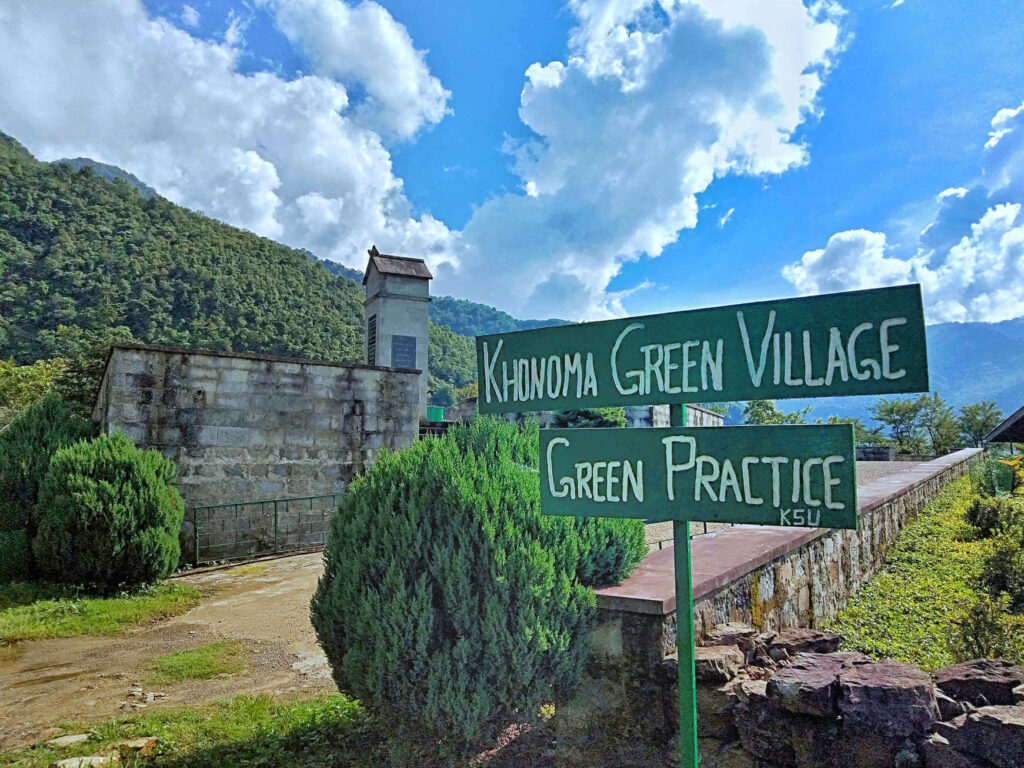
    Today, Khonoma stands not as a tourist spot but as India’s first Green Village — a living example of how tradition can lead the way in conservation.

    From Battlefield to Sanctuary

    In the 19th century, Khonoma was known for its fierce warriors who resisted British colonization. The same determination now protects its hills. In 1998, after decades of unsustainable hunting practices, the villagers voluntarily declared 70 square kilometers of their forest as the Khonoma Nature Conservation and Tragopan Sanctuary (KNCTS).

    This wasn’t government-imposed — it was community-willed. Today, you’ll still find traps, but they’re rusted, tied to trees as reminders of a past they chose to leave behind.

    The Tale of the Tragopan

    Khonoma was once the hunting ground of the Blyth’s Tragopan, a rare pheasant and Nagaland’s state bird. Its numbers were falling fast. But thanks to the conservation efforts, the birds are now being spotted again — timid, yes, but slowly trusting the silence of safety.

    “We used to hunt them to show bravery. Now we protect them to show wisdom,” shares Khonoma’s community elder.

    Snippets from the Forest

    • The Ziekiezou Trek:
      This short but rich trail leads through sacred groves, whispering bamboo, and viewpoints overlooking rice terraces. Guided walks often include stories of medicinal herbs and ancestral boundaries marked by stones.
    • Woodsmoke & Watchtowers:
      Traditional Naga watchtowers once used to spot enemies are now used to sight hornbills. From up there, Khonoma unfolds like a green quilt stitched by generations.
    • No-Gun Generation:
      A new youth group proudly calls themselves the “No-Gun Boys.” They document birdlife, guide treks, and lead awareness drives in local schools.

    Know Before You Go

    • Permission required for KNCTS access: Most homestays can arrange it.
    • Best time: October to April for birdwatching and clear hikes.
    • Avoid plastic: The village practices strict eco-tourism policies.
    • Stay local: Homestays offer guided conservation walks and heritage meals.

    Khonoma didn’t wait for global campaigns or NGOs to fix its future. It looked inward. It chose to change — not to attract applause, but to protect its soul. And in doing so, it became a forest that speaks — not just in rustles and bird calls, but in choices.

    In Khonoma, every leaf is a lesson — not from textbooks, but from the hands that chose not to cut it.”

  • Khonoma Stands Still

    Khonoma Stands Still

    The Village That Rewrote Its Future”

    Perched in the folds of Nagaland’s green hills, Khonoma is a place that decided — decades ago — to live differently. Once known for fierce warriors and age-old resistance, the village chose to pivot. From guns to grain. From forest raids to forest guards.
Khonoma is India’s first Green Village not because of a label, but because of a choice. A collective, conscious, community-led choice.

    You won’t hear slogans here. No signs that scream sustainability. Just everyday acts that whisper it — bamboo fences, rain-fed fields, woodsmoke from kitchens that reuse, not discard.

    The Youth Who Stayed

    In most villages across the Northeast, you hear stories of the youth who left. But in Khonoma, you meet the ones who stayed — by choice.

    A local entrepreneur, runs a millet café with two friends. “Leaving was never tempting,” she shrugs. “There’s more work to be done here than in any city. Real work.”

    That real work includes reviving forgotten grains, documenting dialects, organizing terrace farming workshops, and hosting visitors — not as guests, but as learners.

    Terraces of Memory

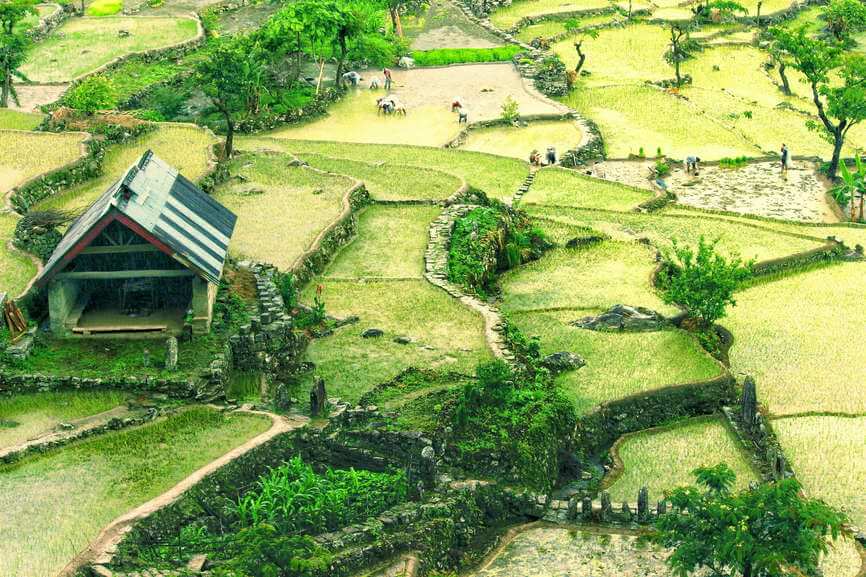
    The fields of Khonoma aren’t just food sources. They’re archives. Rice terraces carved into the hills are named, not numbered. Each has a story, a family, a harvest song.

    Even their construction speaks of balance — not against nature, but with it. Bamboo aqueducts redirect water. Trees shade grain. Grasslines prevent soil slip. There is no textbook — just taught eyes and calloused palms.

    Snippets from Khonoma

    • The Guarded Forest:
      The 70 sq. km. Khonoma Nature Conservation and Tragopan Sanctuary (KNCTS) is protected entirely by the community — without state patrol. Not a single tree is felled without the council’s blessing.
    • The Funeral Log:
      Every tree cut has a purpose. Some are marked years in advance for future rituals — including logs for final rites. Life and death both accounted for, respectfully.
    • The Local Assembly:
      Decisions are made at the Morung (traditional men’s dormitory). Modern problems — like phone towers — are debated with ancient patience.

    Know Before You Go

    • Getting There: 20 km from Kohima, accessible by shared taxis or private vehicles.
    • Stay Options: Homestays offering millet porridge for breakfast and views that don’t fit in frames.
    • Best Season: September to April — clear skies, green fields, warm fires.
    • Local Etiquette: Ask before entering Morungs. Don’t interrupt when elders speak — even if you don’t understand the dialect.

    Khonoma isn’t trying to be a model. It doesn’t perform for your admiration. It just continues — quietly, attentively, collectively — like a stream carving its own bed. In a world obsessed with fast futures, Khonoma reminds us of the dignity in deliberation.

    Progress isn’t always about moving forward. Sometimes it’s about standing your ground.”

  • Khonoma: The Village That Chose Forests Over Firearms

    Khonoma: The Village That Chose Forests Over Firearms

    Nestled in the hills of Nagaland, just 20 kilometers from Kohima, lies Khonoma — a village that once echoed with the spirit of resistance but today thrives as a symbol of peace and preservation. With stone-paved paths, terraced fields carved into the mountainside, and the deep ethos of the Angami tribe, Khonoma is not merely a place to visit, but a story to understand.

    A Brief History of Valor and Vision

    Khonoma’s legacy is etched in Nagaland’s history as the stronghold of Angami warriors who stood against British colonial forces in the 19th century. Known for its fierce defense, the village eventually transitioned from martial pride to environmental wisdom — a journey that shaped its identity into what it is today.

    In 1998, Khonoma declared 70 square kilometers of its forest as a community-protected area, marking the establishment of India’s first “Green Village.” This was a bold step — especially in a region where hunting was once deeply woven into cultural practices.

    What Makes Khonoma Unique

    • Conservation Through Community:
      • The villagers collectively banned hunting and logging in protected areas. It wasn’t imposed by outsiders — it came from within.
    • Terrace Farming as a Living Art:
      • Walk through fields that cascade like green steps down the hills. Here, Alder-based farming keeps the soil fertile without chemicals — a living lesson in sustainability.
    • Architecture Rooted in Identity:
      • Traditional Angami houses with intricate wood carvings, grain storage platforms, and monoliths reflect a harmony between heritage and function.

    Experiences to Have in Khonoma

    • Hike to the Forest Ridge:
      • Trek through dense forests where rare birds like the Blyth’s Tragopan — Nagaland’s state bird — nest in peace.
    • Sit With the Elders:
      • Hear firsthand stories of the resistance, the shift toward peace, and the value of communal living.
    • Witness Traditional Weaving & Crafts:
      • From bamboo basketry to wood carving, the arts of Khonoma are quiet yet precise expressions of its identity.

    The Heartbeat of Responsible Travel

    Khonoma doesn’t offer glitz. What it offers is a rare invitation — to see how a community can turn its story from survival to stewardship. Visitors aren’t outsiders here; they are welcomed into the rhythm of life — gently reminded to slow down, observe, and listen.

    This is the kind of place that leaves you wondering: what if every destination had the agency to tell its story on its own terms?

    The forest is not a place to conquer, but a presence to befriend.”